Enrichment classes for children are a huge industry in Singapore. Almost all Singaporean children take classes outside of school (known as "tuition") in various academic subjects. Art classes, music classes and language classes are all popular too. Personally I am not really a fan of children taking lots of extra classes, because unstructured playtime is so important to cognitive and social development. However, R does take swim class once a week since I want her to 1. be comfortable in the water and 2. not drown.
We take it at one of Singapore's many private clubs (in a very British way, Singapore has a great number of country clubs, sorted both by nationality, profession and institution: the American Club, the Swiss Club, the British Club, the Civil Service Club, the Ceylon Sports Club, etc. This one is the NTU Alumni Club), even though we aren't members. The location is convenient and the facilities are nice.
Class starts with some stretches and exercises. It is very humorous to watch R trying to do jumping jacks.
Then they practice kicking
and splashing around in the water playing ring-around-the rosy.
Then it's time to move to the deeper end of the pool, where they do some actual swimming.
R is pretty comfortable in the water and willing to dive right in.
Then she practices swimming back to the edge of the pool.
She still isn't "water safe" (meaning that she could be left to play unsupervised in the water), but she's getting there. I really like watching her swim around like a little otter.
Showing posts with label education. Show all posts
Tuesday, February 3, 2015
Thursday, November 29, 2012
R at Reggio Emilia Preschool
When looking into preschools for R, I became interested in the Montessori method. In the end, I decided to send her to a preschool without a particular "method" because I liked its location, teachers, and overall atmosphere. I am happy with this choice, and certainly R loves her school.
But I have a soft spot for the fancy Reggio Emilia (not Montessori per se, but a related philosophy) preschool. It costs a fortune (like $20,000 annually) and is not conveniently located (R would have to spend at least 40 minutes daily in commuting), so I eliminated it. We still go there for drop in sessions and additional classes (actually, R starts music class there next week) though.
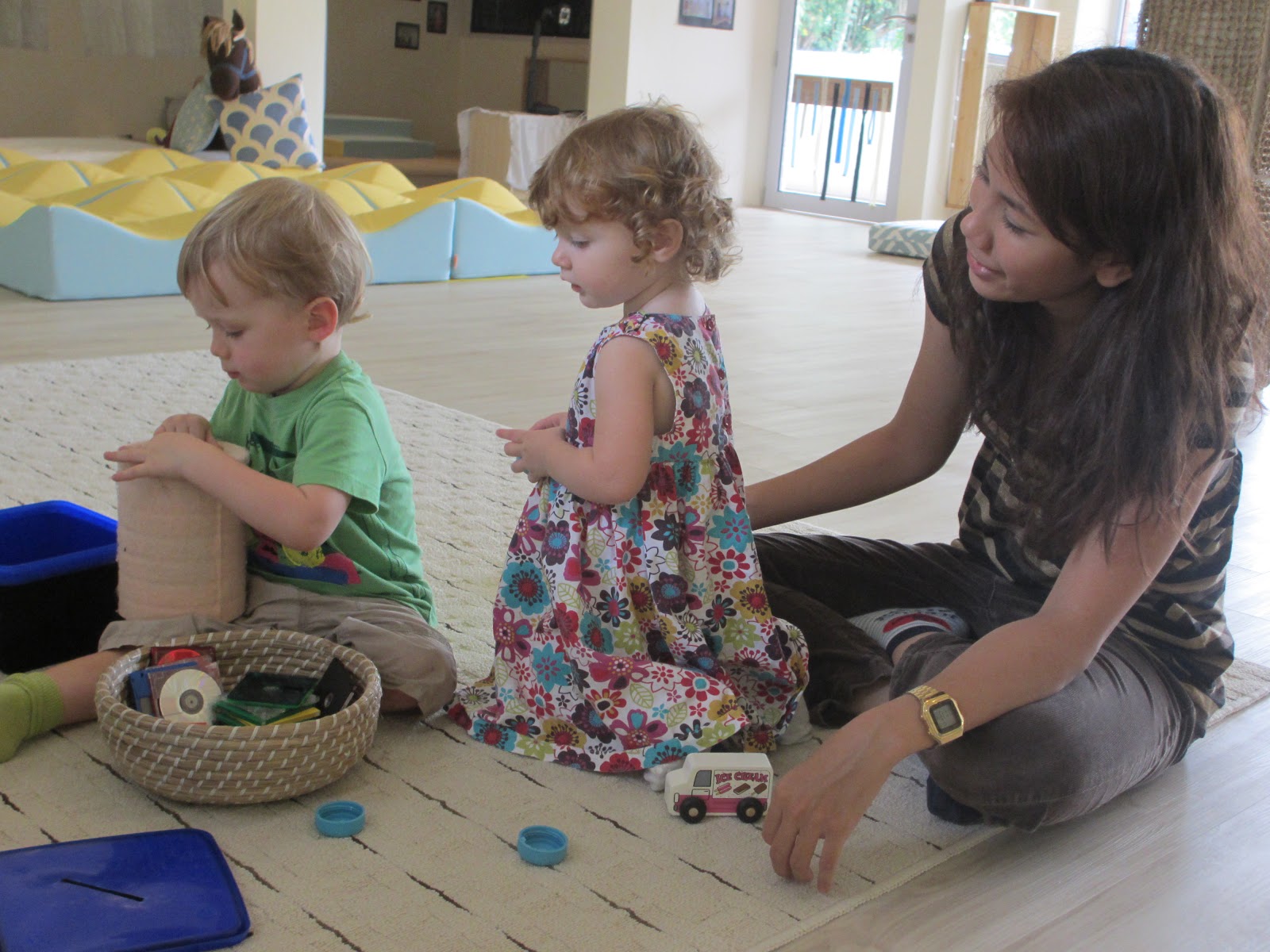
The drop in sessions take place in their "atelier" (such a pretentious name, I know), which is a truly beautiful space, full of light, specially made imported Italian Reggio furniture and interesting "toys". R always has a great time exploring there.
It's a nice change from typical play spaces for children, which tend to be really over-stimulating, noisy and full of plastic. Too bad classy stuff for children only comes at such a steep markup (true for toys, true for schools)!
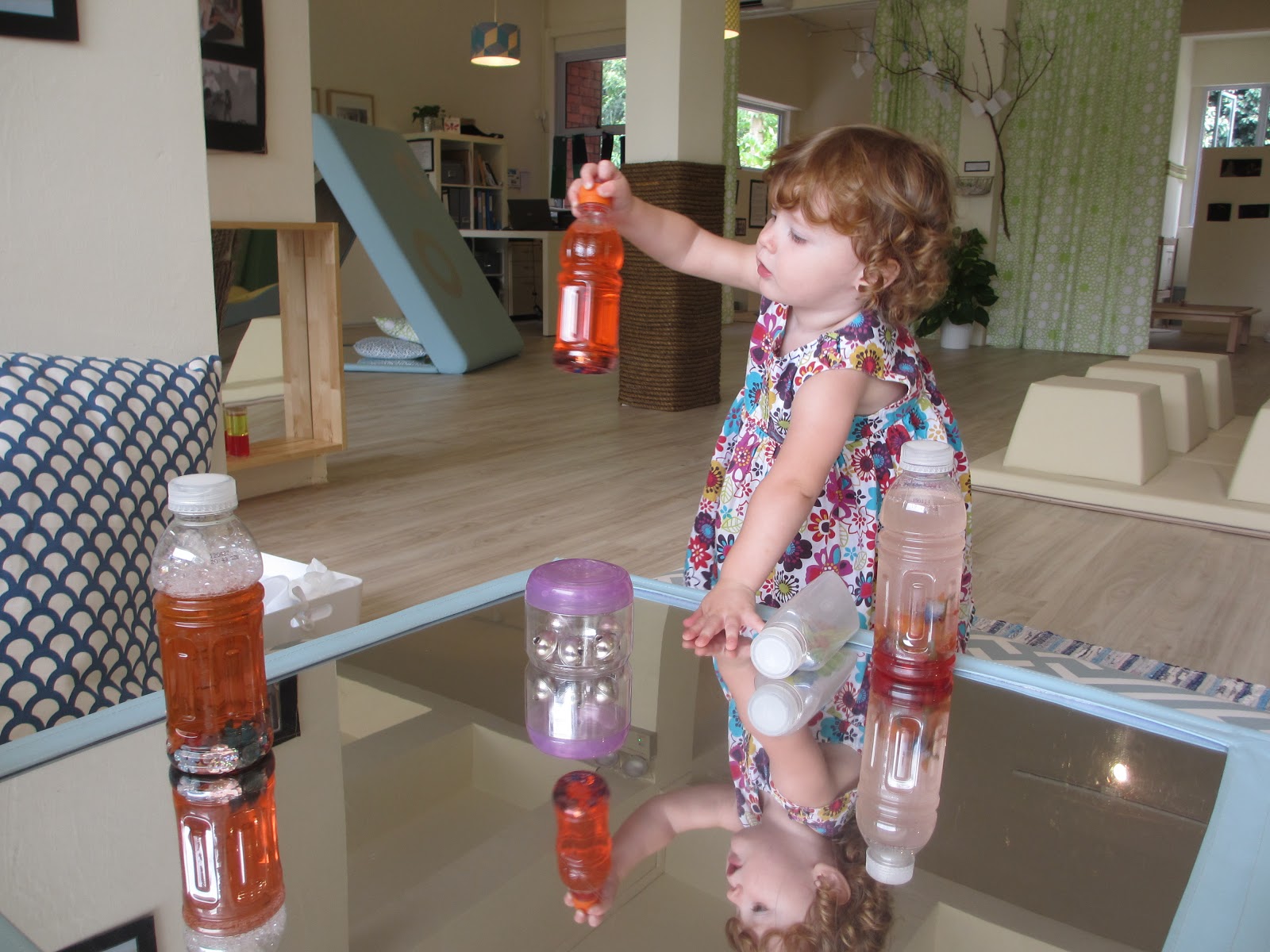
| Learning about liquids (oil and water in bottles) |
| Most of the "toys" aren't really toys, like this handmade shape sorter (they change them each week) |
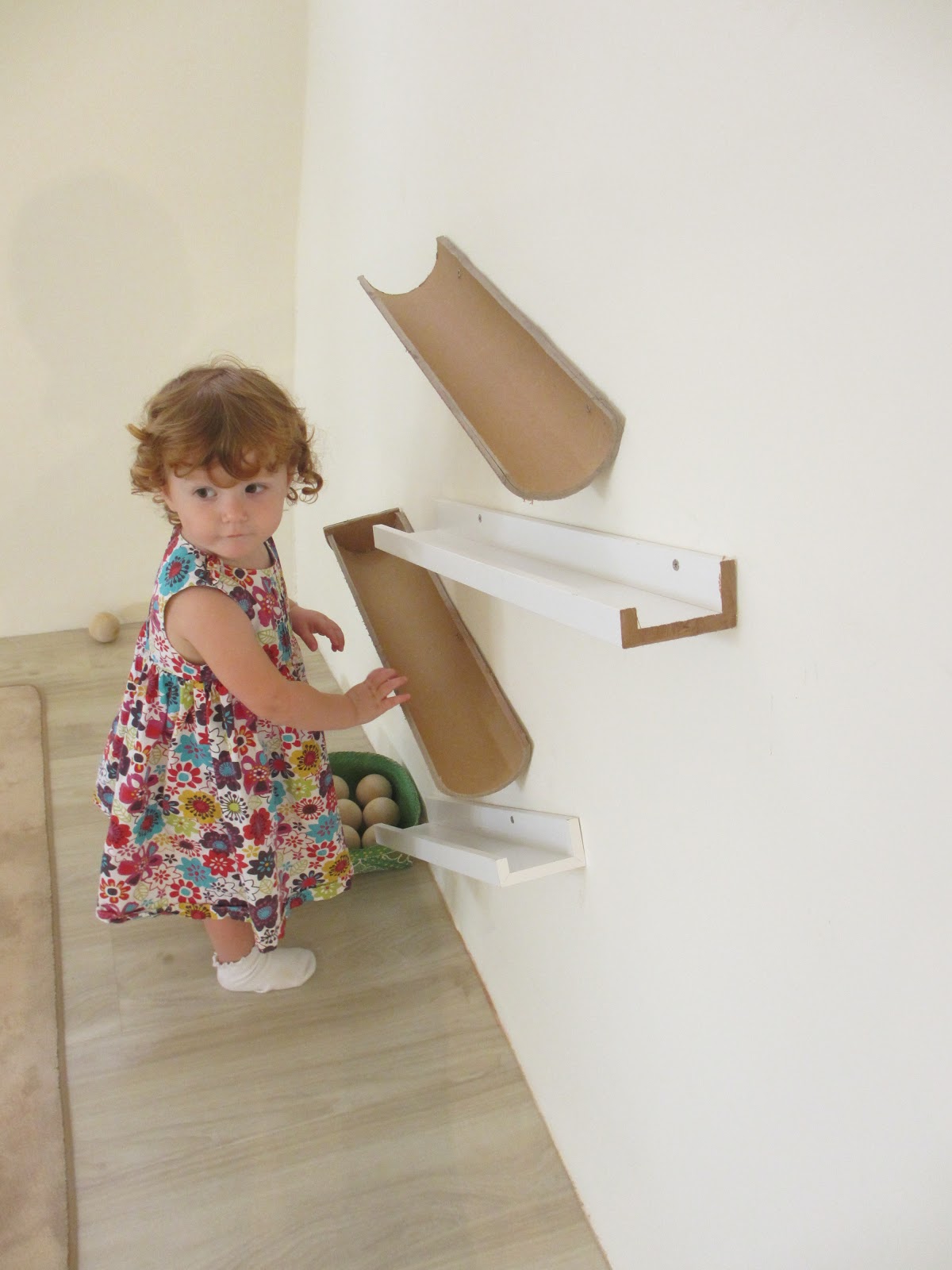
| Or this cool little gizmo for rolling balls on |
| The multimedia corner, with a projector set up so kids can see themselves on the wall. R is fascinated. |
| R on the fancy Italian mats: I wanted some but then learned they cost hundreds of dollars each |
Thursday, March 29, 2012
In China, Being Good at School Can Make You a God
| Chinese temple in Singapore |
| Details of the temple: I like the dog with a bow collar |
| Shrine to a good scholar and administrator |
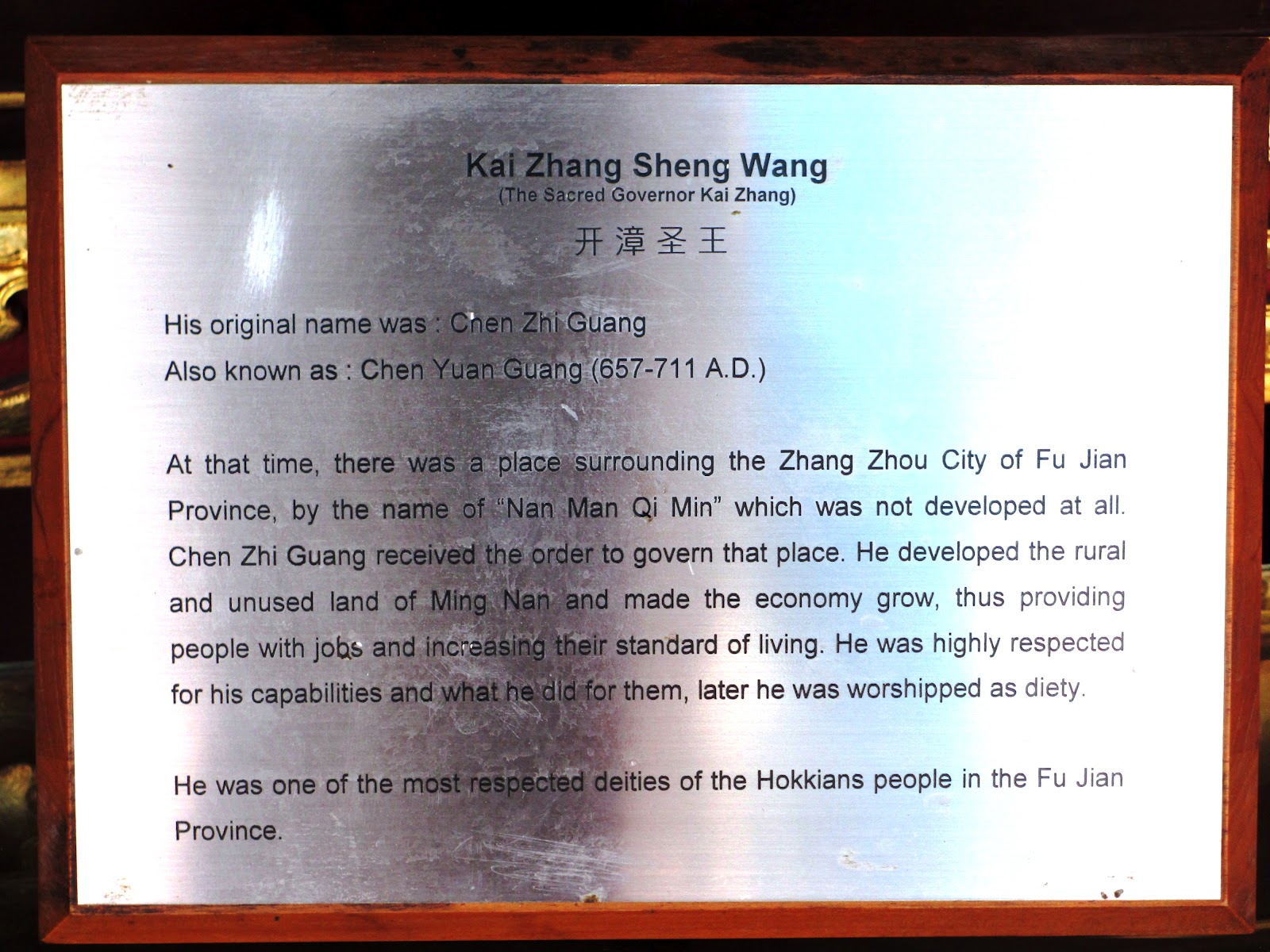
| His life story |
Tuesday, March 20, 2012
Penelope Trunk Should Not Homeschool
I read Penelope Trunk's blog, which I enjoy even though I am not interested in career advice (since I am not a career-focused person, or at all interested in entrepreneurship, start-ups, my "personal brand", and so on). I like it because she is very smart, an excellent writer, and full of interesting ideas and perspectives (many of which are correct if poorly researched/thought out: her strengths are creativity and boldness, not careful consideration and logical reasoning).
She is also really crazy and probably has a personality disorder of some kind (Borderline Personality Disorder has been suggested, which seems likely). She definitely has serious social interaction issues (she believes she has Asperger's) and problems with depression, anxiety, self-harm, anger management, body issues, self-hatred and possibly substance abuse. None of this bothers me as a blog reader, since I simply benefit from her fascinating writing and sparkling mind without having to manage the crazy. But of course in real life dealing with her would be a disaster.
She's recently decided to home school her two young children (6 and 9 years old). This lends further proof to my theory that homeschooling ought to be banned. For the most part, the only people who choose to homeschool are those who should definitely not. Most people homeschool because they have wacky religious beliefs and want to assure that their children do too (over 80%). I do not think that deliberately depriving children of important knowledge about history and science is at all a good idea; in fact, it teeters on the border of child abuse (in addition to being terrible for society).
The small minority of non-religious fanatic homeschoolers are a diverse bunch, ranging from people like Penelope Trunk (who is basically a upper class Jewish urbanite oddly living in rural Wisconsin, who not surprisingly dislikes the local schools) to hippies who don't believe in formal education to those searching for a solution to a lack of meaning in their lives (housewives who don't want to go back to work, for example).
The non-religious homeschoolers tend to concentrate on the humanities: reading, writing, the arts, drama. These are all noble and important endeavors. Unfortunately, it's difficult to measure one's talent in them objectively. As a result, without a lot of feedback from the general public, it's hard to know if you are any good. Being publicly educated is a great way to learn how to compare yourself to others, and develop a realistic sense of your talents. Homeschoolers do not have this advantage and thus tend to become conceited, with unfounded very high opinions of themselves (this article is a great example of such a phenomenon).
Homeschoolers also don't learn how to deal with being bored. One of the things I really liked about the otherwise not-great Battle Hymn of the Tiger Mother is that it acknowledges that learning most worthwhile things is often dull. While learning can be incredibly exciting, especially if you are smart, in any subject there's also a lot of rote memorization, practice, and general dullness. If you aren't willing to put up with this, then you aren't really going to know that much.
This is especially the case for the more mentally-challenging disciplines of math and science. It's not surprising that few homeschoolers do either one; it is very concerning, however, because an understanding of science in particular is truly crucial for any modern person. In addition, since almost all the careers which pay well are in these areas, disqualifying your child from pursuing them is a real disservice.
Another major problem with homeschooling is that it draws children much closer to their families. Homeschoolers tend to cite this as a positive (a majority listed it as a major benefit of homeschooling in one recent survey). Penelope Trunk is no exception: she lists it as the main reason she likes homeschooling. But it's only an advantage if your parents are really well-adjusted, loving, and respectful of a child's need to differentiate and become independent. If the parent is crazy (as in Penelope Trunk's case), the child needs as much exposure to alternative, non-crazy modes of being as possible.
Penelope Trunk obviously loves her children, but unfortunately love is not enough if you are psychologically troubled. Homeschooling, and thus shrinking your child's world down to your own personally created universe, is a terrible idea if you are a needy, highly unstable, constantly distracted mother in an abusive relationship.
Such a shrinkage would only be desirable if the parent was such a superior person that their world really was objectively better. Sadly, this is the case for very, very few people, and almost certainly almost none of them would think it about themselves (since one of the signs of true greatness is humility, or a genuine understanding of one's defects). It's sort of like Plato's Republic: the only people qualified to rule are those who have no desire to do so.
Tuesday, March 13, 2012
Little R Is Not Artistic
So little R goes to the fancy baby Mandarin school (which might be working; she just started pointing at things and saying juhguh? when she wants to know the name, which sounds just like the Chinese word for "this one"). Since she's a baby, the "classes" are just various types of playing (free play, singing, etc.). Little R loves almost all of it, with the exception of art time.
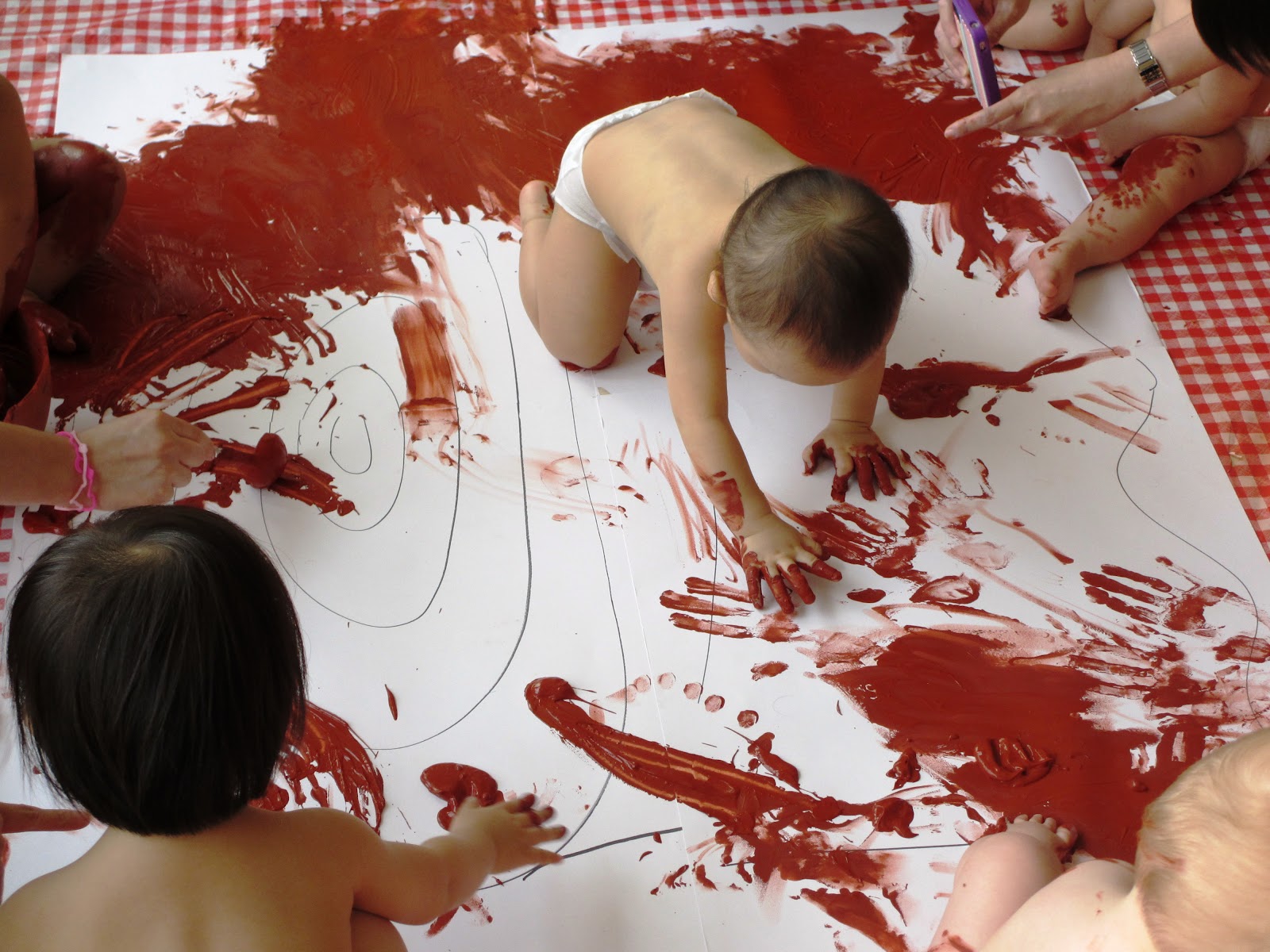
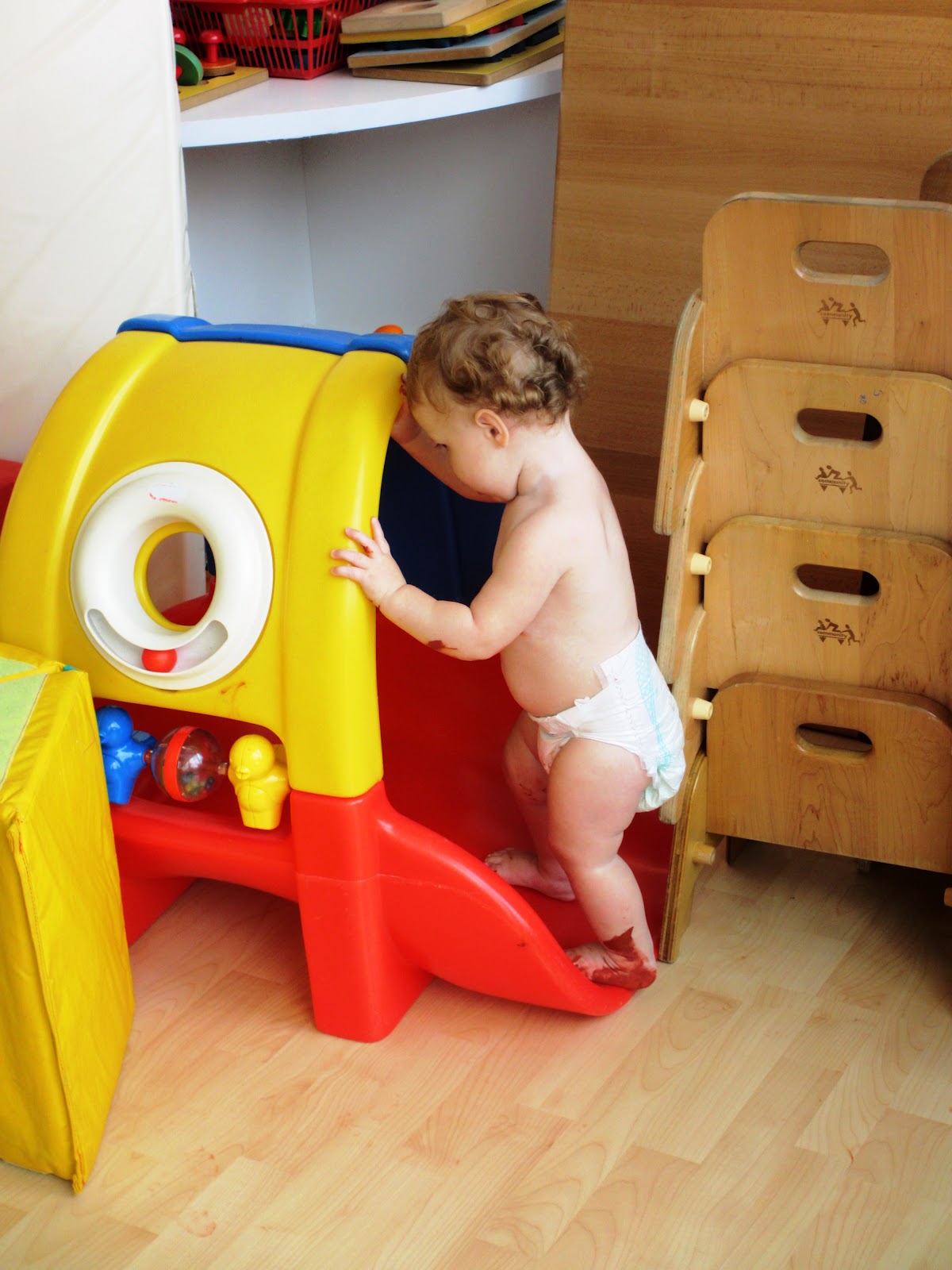
Whenever there's an art project, she refuses to participate and finds something else requiring her attention on the other side of the classroom. I never force her, but it seems strange she has such an aversion. All the other babies love smearing themselves with paint.
Here are the other babies, having a fine old time body painting:
And here's little R, ignoring them all, trying to climb into the baby slide in the corner, on the other side of the room (as far away from the nasty paint as she can get):
I am not sure what is going on here. Usually she loves new things. She doesn't seem scared at all, just completely uninterested. Maybe it's a phase?
Wednesday, February 1, 2012
Little R Starts School
I signed little R up for Mandarin classes today: she will be taking twice-weekly classes for 1.5 hours a time. She also is enrolled in weekly baby swim classes. (I was considering a music class as well, but decided that three separate classes was definitely overboard.)
All of this is pretty silly, considering that little R is only 11 months old and is nowhere close to talking, even in English. I feel sort of sheepish about it, like I have turned into one of those parents I used to make fun of, trying to cram my child full of "enrichment" (usually with the goal of getting them into Harvard).
So why am I doing it? Of course my reasons are basically selfish, like almost all other parenting decisions. For the swim classes, I want little R to be comfortable in the water, so that her chances of drowning (one of the leading causes of death for small children) will be reduced. Unfortunately, I hate swimming and the water. Signing her up for classes is a way to force myself to spend (a little bit of) time in the water with her. So basically she's in swim classes because I'm undisciplined. (She does love the water though!)
She's in Mandarin classes partly for the same reason. B and I both really want her to learn Mandarin; we should speak it at home, but due to laziness my language skills have deteriorated so much that this isn't a good option anymore. By attending her classes, little R gets exposure to the language. As a side benefit, I am forced to speak Mandarin too (because the classes are Mandarin-only), which hopefully will impel me to start studying again.
I also like taking her to classes because 1. they make her tired from all the excitement and stimulation, so she is much better behaved at home (and her naps are longer!); 2. we both get out of the house (I get really bored at home all day, and now that little R is older, so does she); and 3. she gets to meet other children.
I thought she wouldn't be interested in other babies/toddlers until she was quite a bit older, but she is a little social butterfly. She loves interacting with other children, and is not at all shy (she is usually the one to approach them first, actually); this is surprising as both B and I are pretty introverted. Maybe it's a phase? (I hope not, though, because life is so much easier for the outgoing and self-confident.)
Taking her to the classes (and other little R-focused activities, like playdates and mothers' groups and baby gyms) makes me wonder how other mothers do it without these activities. If we just stay home all day, little R becomes naughty (the saying about idle hands and all) and gets into everything. She also destroys the house (since she has more time to do so) so that it looks like a cyclone, full of broken objects strewn everywhere (in the last week, she broke two statues, the camera (=why no photos lately), several books and a plate). Keeping her busy in some other environment means we are both happier. Maybe other people's children are less active/enterprising at destruction?
Wednesday, September 21, 2011
Education in Singapore

One of the differences between Singapore and the United States is the attitude towards education. In Singapore, being a good student is really the only acceptable goal in life, and this is measured in very exact ways (mostly by standardized tests). If you are successful, the rewards are substantial. Schools are covered in banners congratulating successful test-takers, and they are even used in advertisements (as shown above: there are at least two products with a similar ad campaign within walking distance of my apartment).
Later on, universities rank their graduates using a five-tiered system (instead of the three-tiered one in the US, I suppose because it allows for even more complex ranking). Your salary throughout your career is largely determined by this ranking, not only when starting, but permanently. And the government is largely controlled by these successful test-takers. (In fact, my husband's boss--a university professor--was previously appointed as a member of Parliament, presumably on the strength of his intellectual qualifications, since he knows nothing whatsoever about politics or government.) It is perhaps not surprising that Singapore has one of the world's best education systems.
The flip side of this intense focus on succeeding academically is that there is very little opportunity for creative self-expression or difference. A few months ago, I read a story about a medical student who had decided to drop out in order to pursue an interest in theater: the idea of choosing artistic endeavors over higher education was so bizarre to the average Singaporean that it made the national newspaper. And if a child has learning disabilities, or just isn't very good at school, then there is really no recourse for them. They are doomed to a life of poorly paid jobs and diminished opportunity. (Singapore actually doesn't even have public education for the disabled.)
Subscribe to:
Posts (Atom)