I just finished Mountains Beyond Mountains, a biography of Dr. Paul Farmer. He is a brilliant Harvard-educated doctor who has dedicated his life to helping the world's poorest people, specifically in rural Haiti. Farmer himself is a fascinating character, but what has most interested me so far is the question of poverty.
According to the book's very vivid descriptions, Haiti is a miserable place: environmentally degraded (much of it is apparently dusty moonscape, thanks to deforestation and topsoil loss), filthy, lacking almost all public amenities (like roads or clean water), and extremely crowded with sickly, extremely ignorant, malnourished, abused (by the government, mostly) peasants. The author refers to it as a "war zone" more than once.
Farmer, a rather saintly person, is terribly concerned (indeed, obsessed) with helping the unfortunate people of Haiti. He attempts to do this through providing high-quality (first world level, if possible), free medical care, and by extension other services (constructing better housing than the typical miserable shack, providing education, putting in public latrines and sources of clean water, etc). To this end, he has created an entire large charity dedicated to providing the world's poor with medical care (they operate not just in Haiti, but also in Rwanda, Peru, Chiapas, etc).
It all sounds so wonderful: preventing little children from dying of treatable diseases, delivering quality health care to EVERYONE who needs it, regardless of the ability to pay, tangibly benefiting the world's neediest people...And yet, as I read the book, I kept thinking that all of the (heroic) efforts and (generously donated) resources were being misapplied.
In a way this isn't true of course: for each individual (and their loved ones), receiving medical treatment makes a big difference: the difference between life and death, in fact. But it's like being a medic in the middle of a war: yes, you can stop the bleeding of this or that soldier, but while people are continuing to shoot at each other you aren't going to make any real progress. In fact, in a situation like Haiti's (where the land is terribly overpopulated and can't actually support the current number of people living there), providing really good medical treatment might just make the situation worse (since now the available land will have to support many more).
A solution for "the problem of Haiti" has already been found. Haiti is uniquely miserable now, but just a few hundred years ago, everywhere was like Haiti. In fact, Haiti is significantly better off, because they have access (even if it is limited and spotty) to the resources of the modern world (like the medical services Farmer supplies).
For thousands of years, most people lived lives of grinding poverty. They couldn't afford to eat meat more than a few times a year: their diet was monotonous in the extreme (a single kind of grain, vegetables in season and seasoning if they were lucky) and highly inadequate. So most people were stunted: the average Dutch man used to be 5'4" (he is now 6 feet). They lived in single-room, highly uncomfortable hovels and were totally ignorant. Most people never even ventured more than a few miles from their place of birth, in part because they couldn't: a large percentage of them were slaves/serfs.
Violence was commonplace and constant. From childhood, most people were frequently, brutally beaten (Martin Luther, when describing his youth, describes his mother beating him "to a pulp" for stealing a nut at around age 5: this was quite ordinary). This continued in adulthood: masters were legally entitled to beat (or kill) servants, husbands to beat (or kill) wives, the upper classes to beat (or kill) the lower. Since justice was capricious and scanty (police were too expensive), the crime rate was extremely high (the murder rate was perhaps 10 times that of the contemporary United States, or over 7 times that of Haiti).
While of course there was regional variation, it's important to realize that almost everywhere was like this. China, Europe, Mesoamerica...it's all the same, a depressing record of exploited peasants living under the twin threats of famine and sudden death (whether by disease, war, the state or unfriendly neighbors). Hunter-gatherer life was little better, with even higher rates of violence and the possibility of starvation never far away, even if the exploitation was less.
Haiti is now the exception. Hundreds of millions of people live lives of comfort, safety and ease, with problems like being too fat (from all the rich, varied food they consume) . The murder rate has plummeted, as has casual violence; most people are literate; and human living environments have never been cleaner (to the point that it may be causing allergies). And we own so much more: a wealthy peasant might own one bed, two stools and a couple pots (no, really!)
Even in 1850 London (possibly the richest place on earth at the time) the streets were filled with children dying of starvation and exposure and people making their living by collecting dog feces, nails, or bones while standing in untreated sewage (no, really).
So what happened? The answer is simple: technology. Specifically, industrialization. Previously, a gain in resources for one meant taking it away from someone else (the way a king would take his peasants' grain). But industrialization increased the size of the pie. A cobbler might make one pair of shoes a day: the factory could make hundreds. Now everyone could have shoes! Crop yields increased dramatically: suddenly there was more than enough food to feed everyone (hunger today is due almost entirely to poor distribution: past famines happened because there just wasn't enough food to eat). Greater resources meant that people could spend money on things beyond basic survival: universal education, investments in scientific research, road building and other public works projects, a highly trained police force, tree planting...the list is mind-boggling. The world finally bid goodbye to a subsistence economy and entered the modern era, where the main problem is now the wise management of resources (rather than simply struggling to find them).
Haiti needs to do the same: and if it does, it will not need massive fundraising efforts to prevent people dying of cholera. Building roads (and later, factories) seems so much more important to me than building a hospital, even if it is not as emotionally appealing.
Showing posts with label history. Show all posts
Showing posts with label history. Show all posts
Friday, March 8, 2013

Monday, February 4, 2013
Native People in Japan
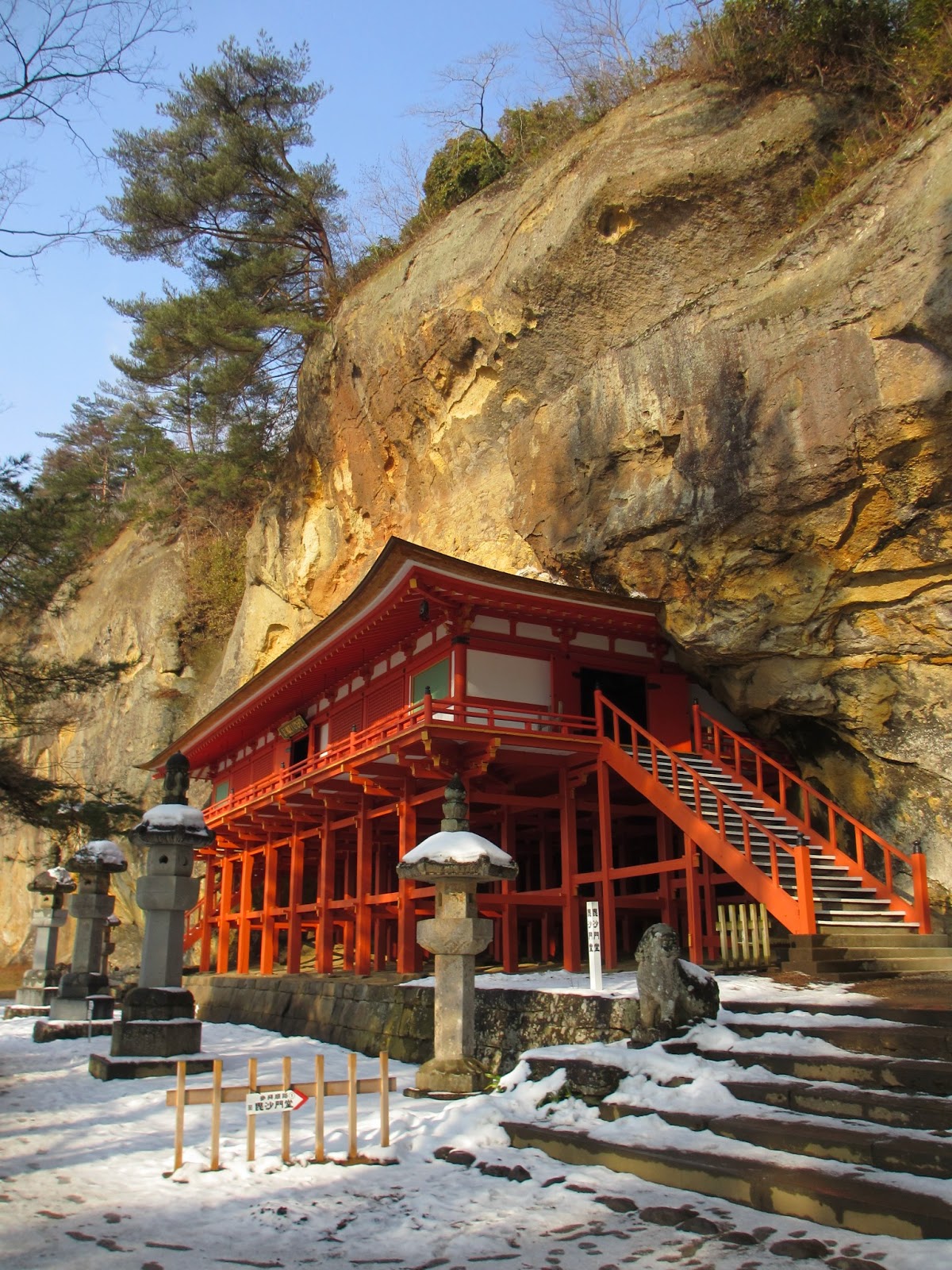 |
| Takkoku no Iwaya |
Today Japan is one of the least ethnically diverse places in the world: but originally the Japanese were immigrants. The original inhabitants of the islands were a pale-skinned, hairy people (typically sporting full beards, something that is not possible for many Japanese men): in fact, they look Caucasian (though according to DNA analysis they are not). They are known as the Ainu.
The Japanese fought with them for centuries, gradually pushing them up into the farthest reaches of the north (today they live only in Hokkaido); they have also been discriminated against for centuries (and in fact, their existence is not really acknowledged by the Japanese government even today, as it contradicts various important national myths).
These battles raged around Hiraizumi: around 800 AD, the military leader Sakanoue no Tamuramaro was sent from Kyoto by the court to defeat the Ainu in the region for good. He succeeded, and commemorated his victory with the construction of this temple. Its design mimics a temple in Kyoto and it was built directly on the site of the Ainu chieftain's fortress (the Ainu are not Buddhist). In other words, it served a function of social control and cultural domination.
 |
| Series of torii leading to the temple complex |
 |
| I love torii: there is something very magical about the concept of a gate between the mundane and spirit worlds |

 |
| The fortress was in a cave; now the temple is |
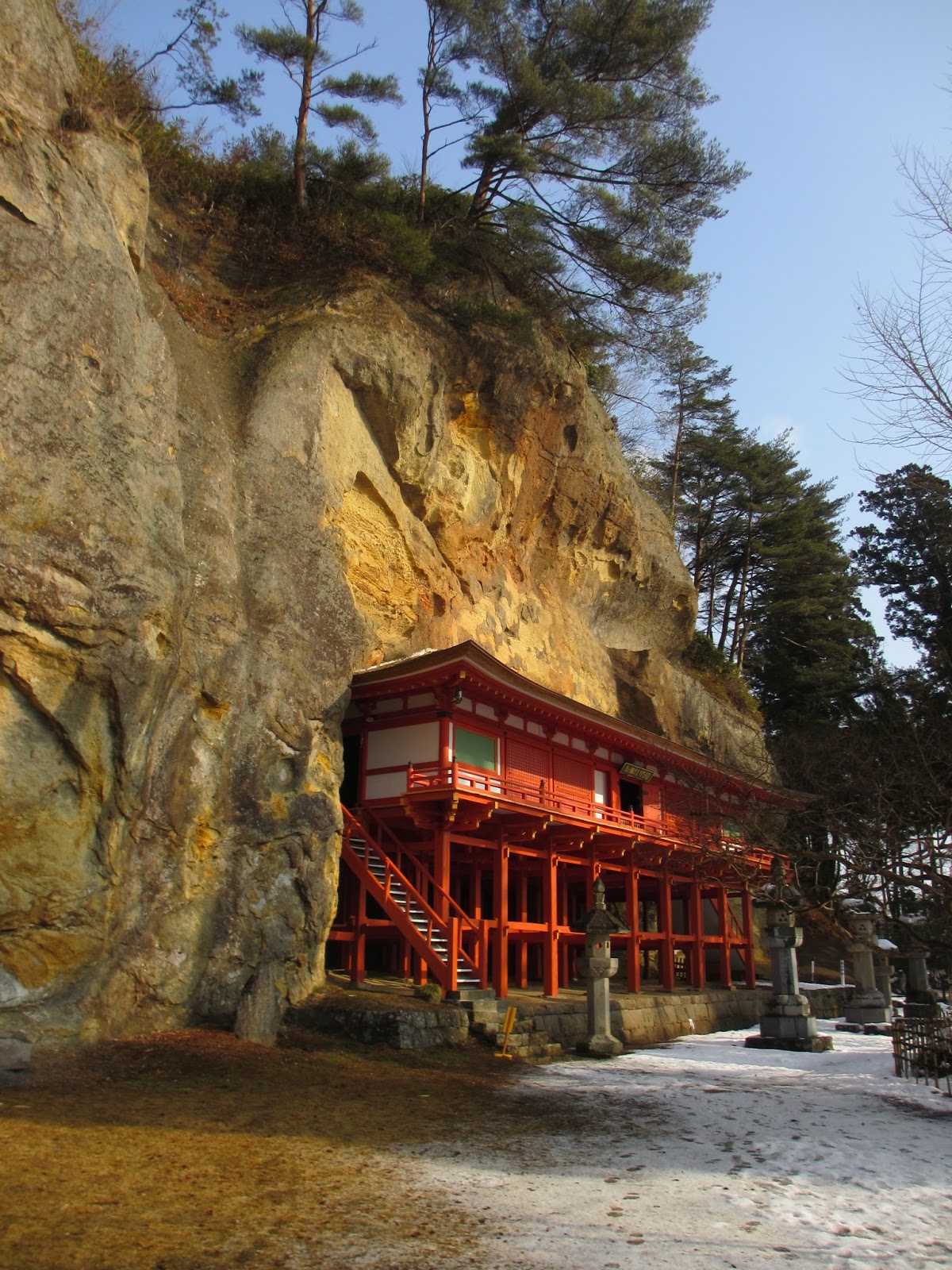 |
| Backside of the temple |
 |
| A Buddha's face is carved into the cliff: it's the northernmost in Japan |
 |
| Closeup of the face |
 |
| The temple is (appropriately) dedicated to the god of war: here's some sword offerings |
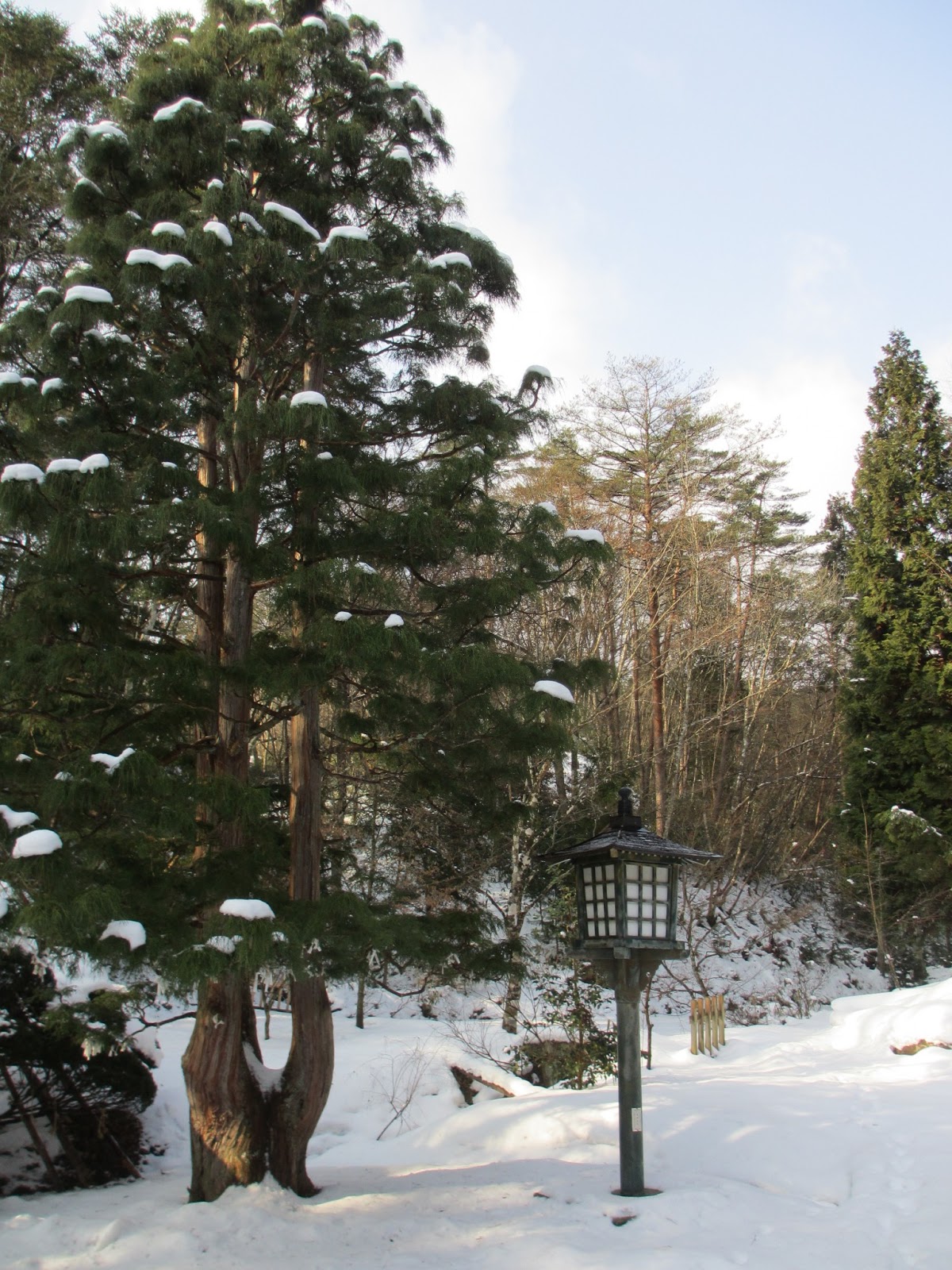 |
| This tree looks fake because it's so carefully groomed |
 |
| The temple is out in the countryside: here's a traditional Japanese house next door (the dwelling for the priest maybe?) |
Sunday, February 3, 2013
History in Hiraizumi
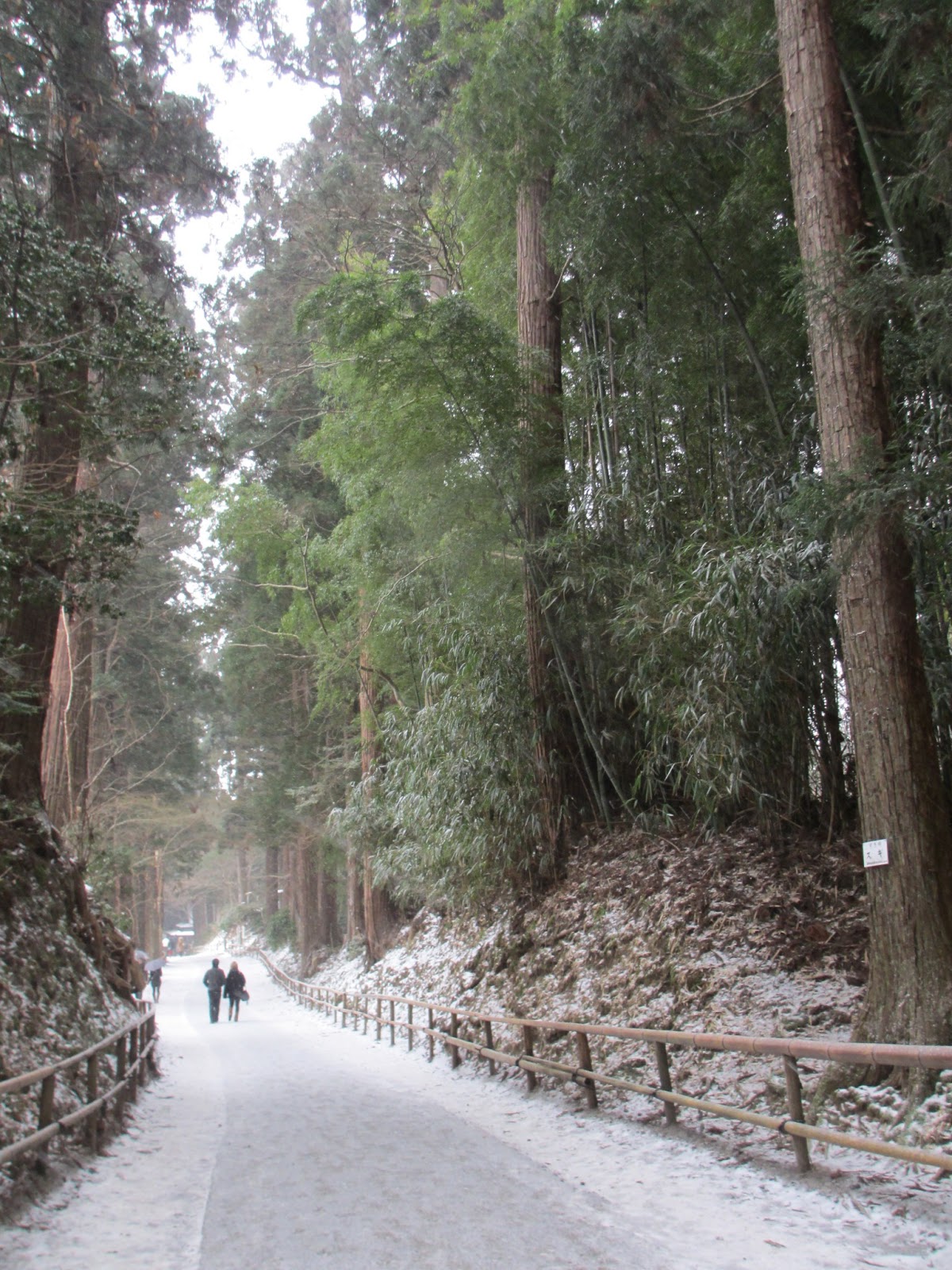 |
| Entrance to the main temple area |
B is not as big a fan, but luckily for me he is pretty tolerant and willing to spend hours looking at (historically significant!!!) dirt pits and piles of rubble. (His mother also loved this kind of thing, to the point that B and his brother used to call her a "ruinaholic", so I guess he had some home training). Northern Japan has only one UNESCO world heritage site so naturally we had to visit it.
The site is Hiraizumi, which over a thousand years ago was the capital of the Fujiwara clan. They ruled about a third of Japan (technically owing allegiance to the emperor far away in Kyoto, but actually doing just as they liked). The rulers were devout Buddhists (Buddhism was a relatively recent import to Japan at the time) and designed their capital to represent the Buddhist paradise (or "Pure Land"). This didn't only extend to the buildings, but the very landscape: every tree and rock was deliberately placed, and they even artificially raised the height of the nearby mountain.
 |
| This is an enormous artificial lake, created according to Buddhist cosmological principles |
 |
| All the rocks have been imported at great expense from far away, then carefully arranged to look this way |
 |
| The river is artificially-created too (the bends are there on purpose, to give it a certain look) |
 |
| In the summer, they have a traditional Heian poetry contest here, where glasses of sake are floated down the river from poet to poet: they must complete a line of verse before the cup reaches them, then take a sip |
 |
| It's still an active temple complex, with very famous religious rites held annually (they date unchanged from its founding) |
 |
| More carefully placed rocks (with artificially heightened hill in the background): the Japanese sense of landscape design, even 1000 years ago, is very different from the Western one |
 |
| Another garden/temple complex, with another artificial lake and rocks |
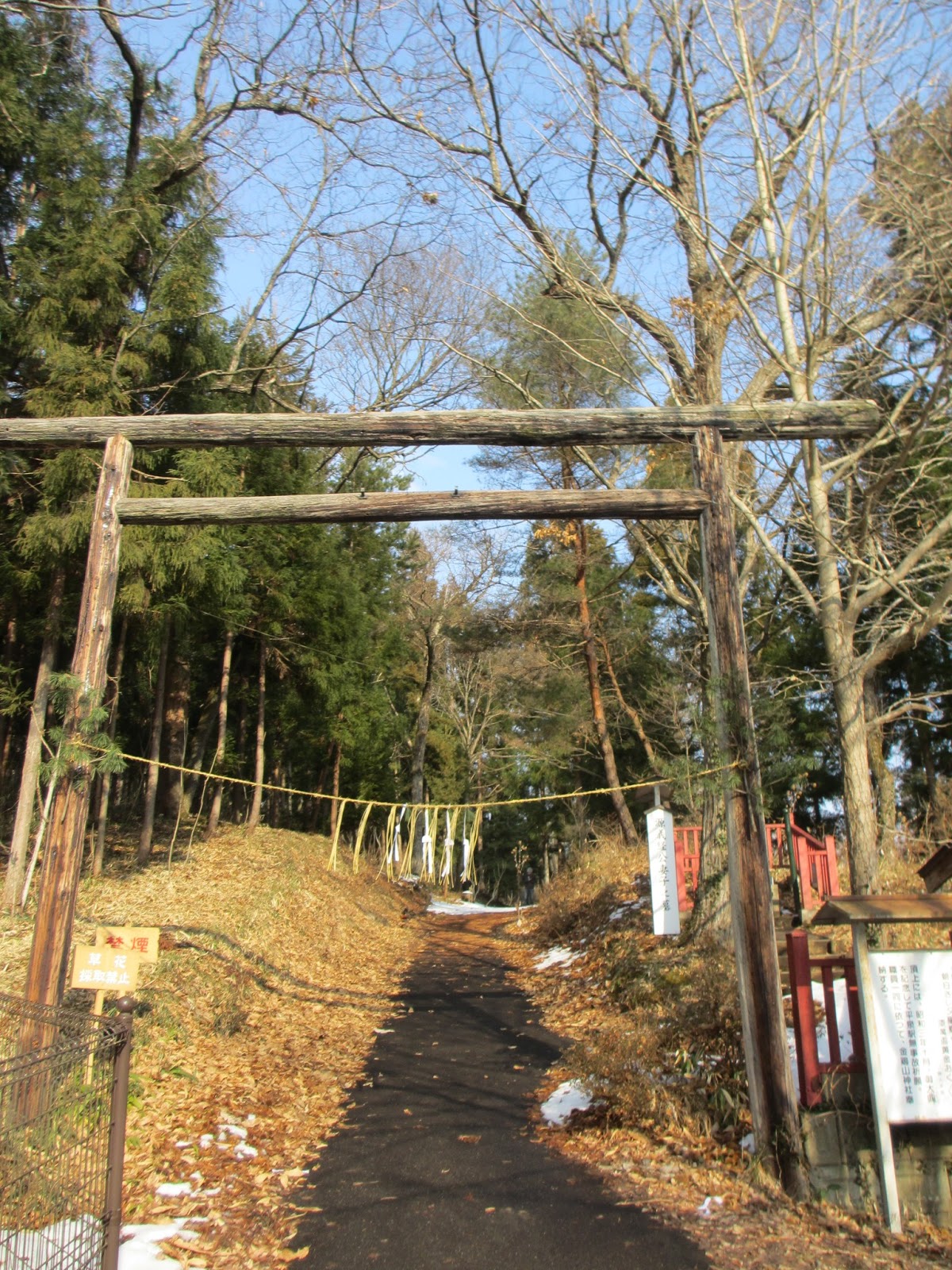 |
| Very rustic torii (these gates mark the entrance to sacred ground) and the path to the artificially-heightened hill |
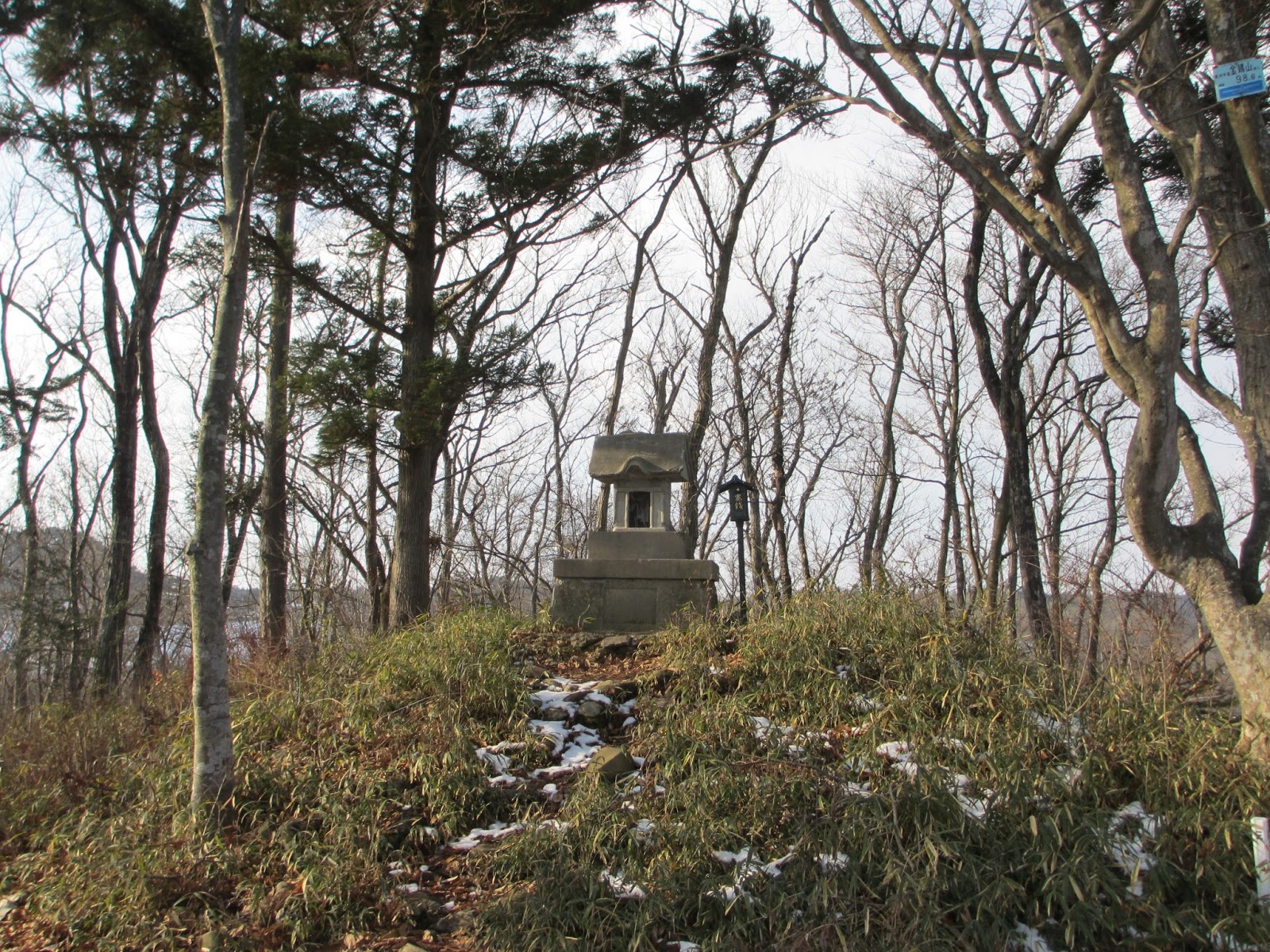 |
| Shrine at the top: supposedly sutras were buried here. The graves of Yoshitsune's family (murdered for political reasons) are at the bottom of the hill. |
 |
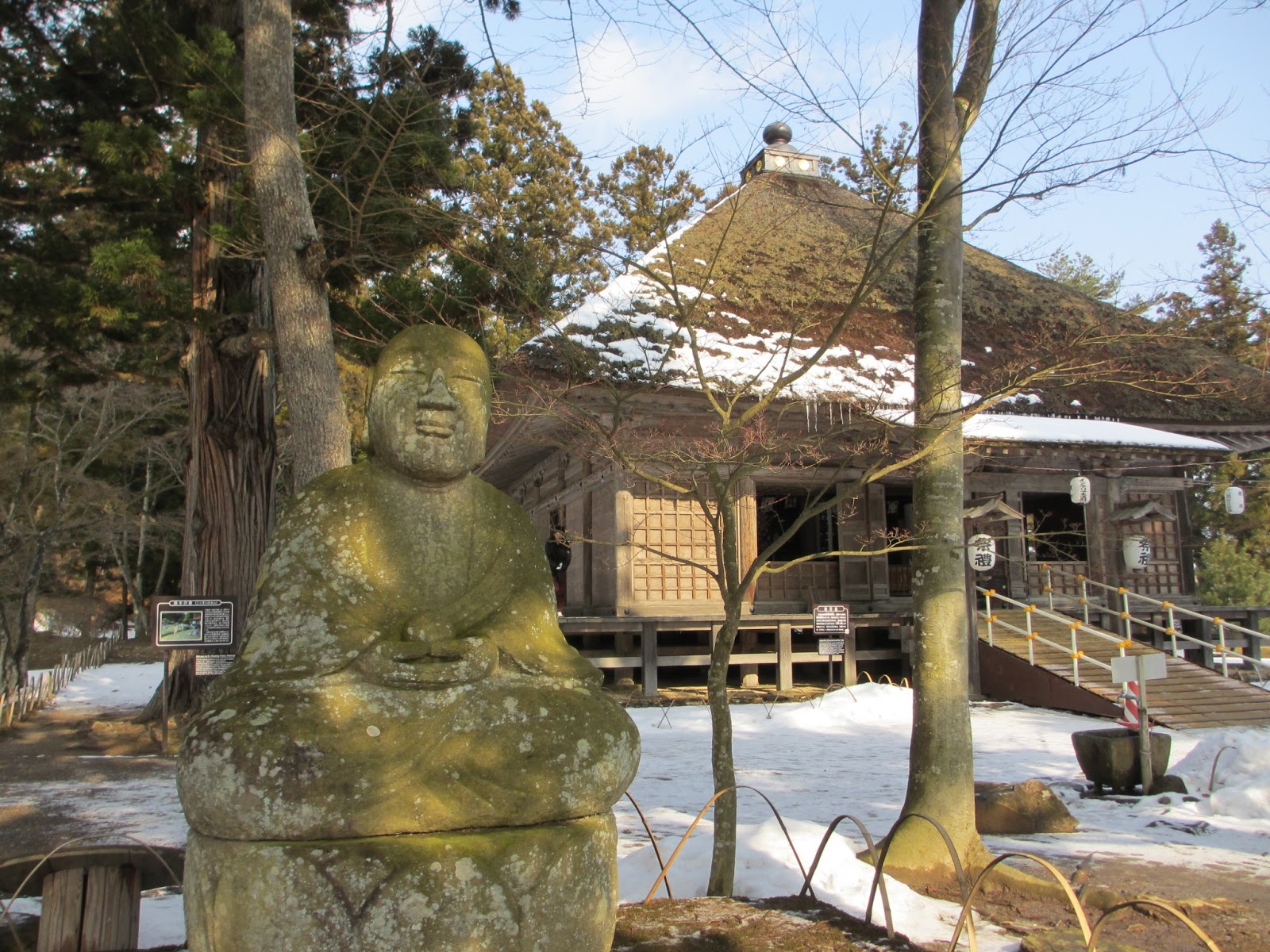
| Main hall of Chuson-ji |
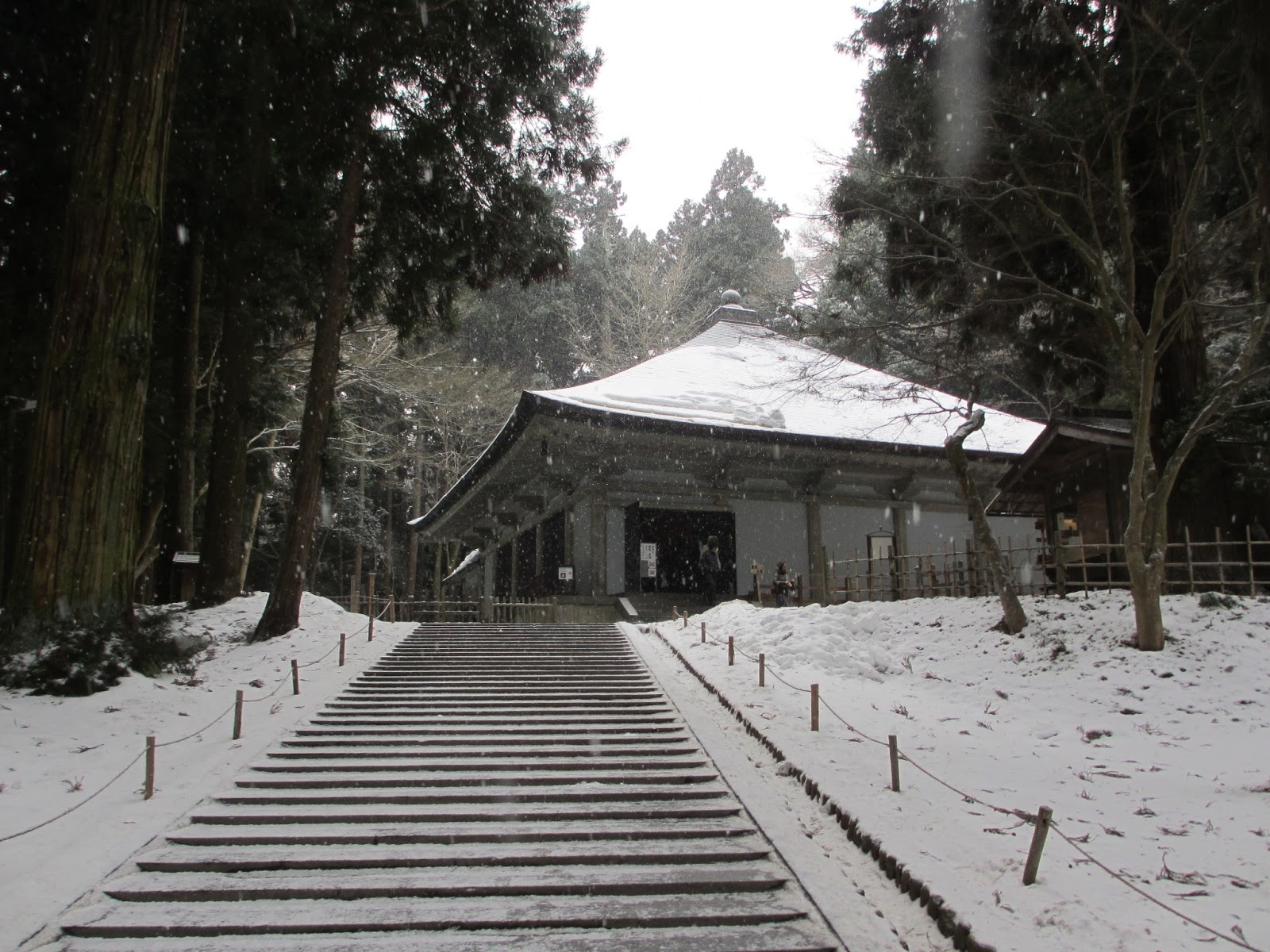 |
| The "Golden Hall", where a wooden temple entirely covered in gold (containing the mummies of the rulers) resides. No pictures are allowed inside but it is impressive in its beauty and the incredible expense obviously involved. |
 |
| Japanese equivalent of a log cabin: where a famous priest resided when visiting |
 |
| Noh theatre stage, where traditional plays are still performed |
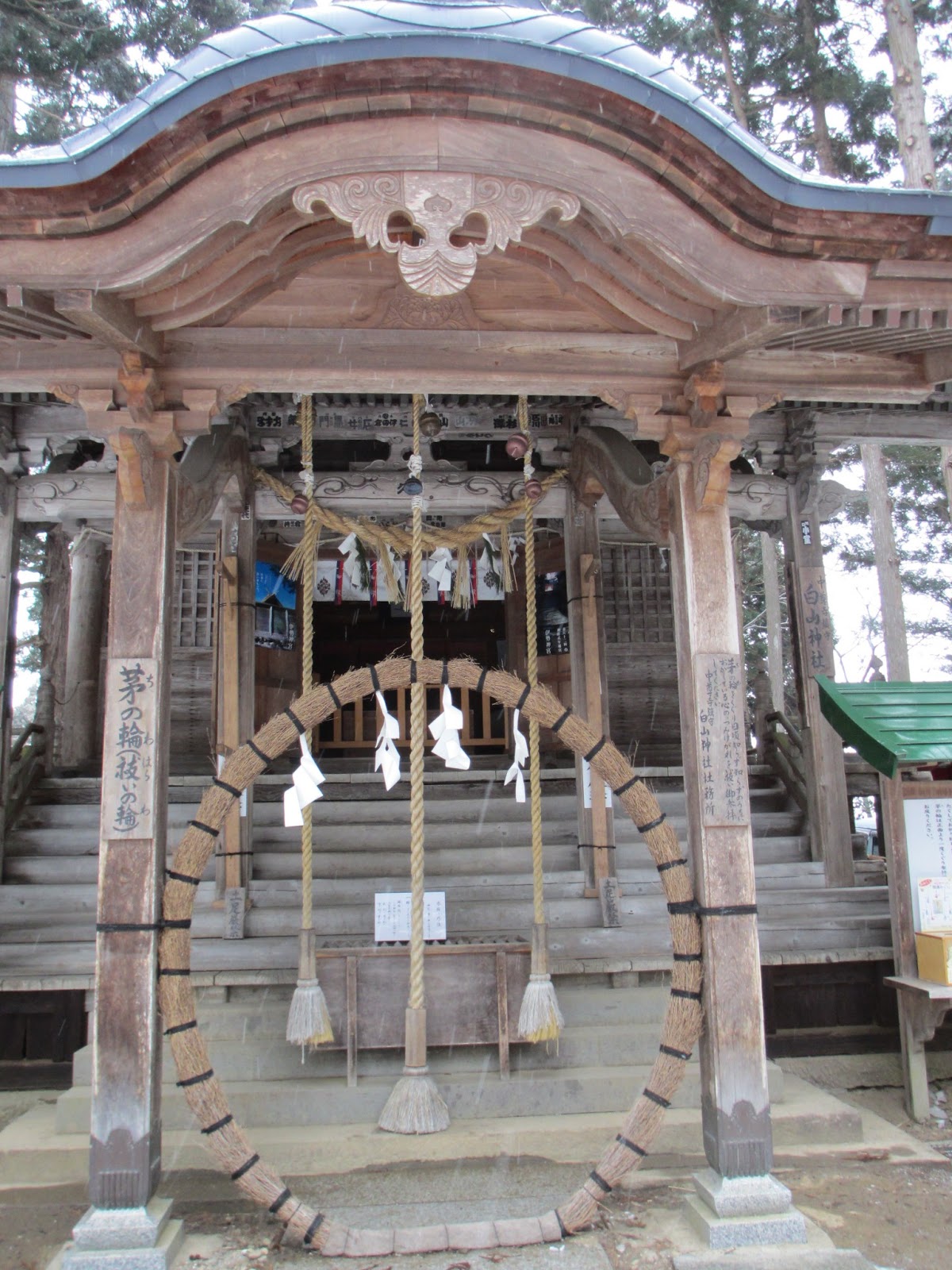 |
| Shrine: Japanese temples are usually of unadorned wood |
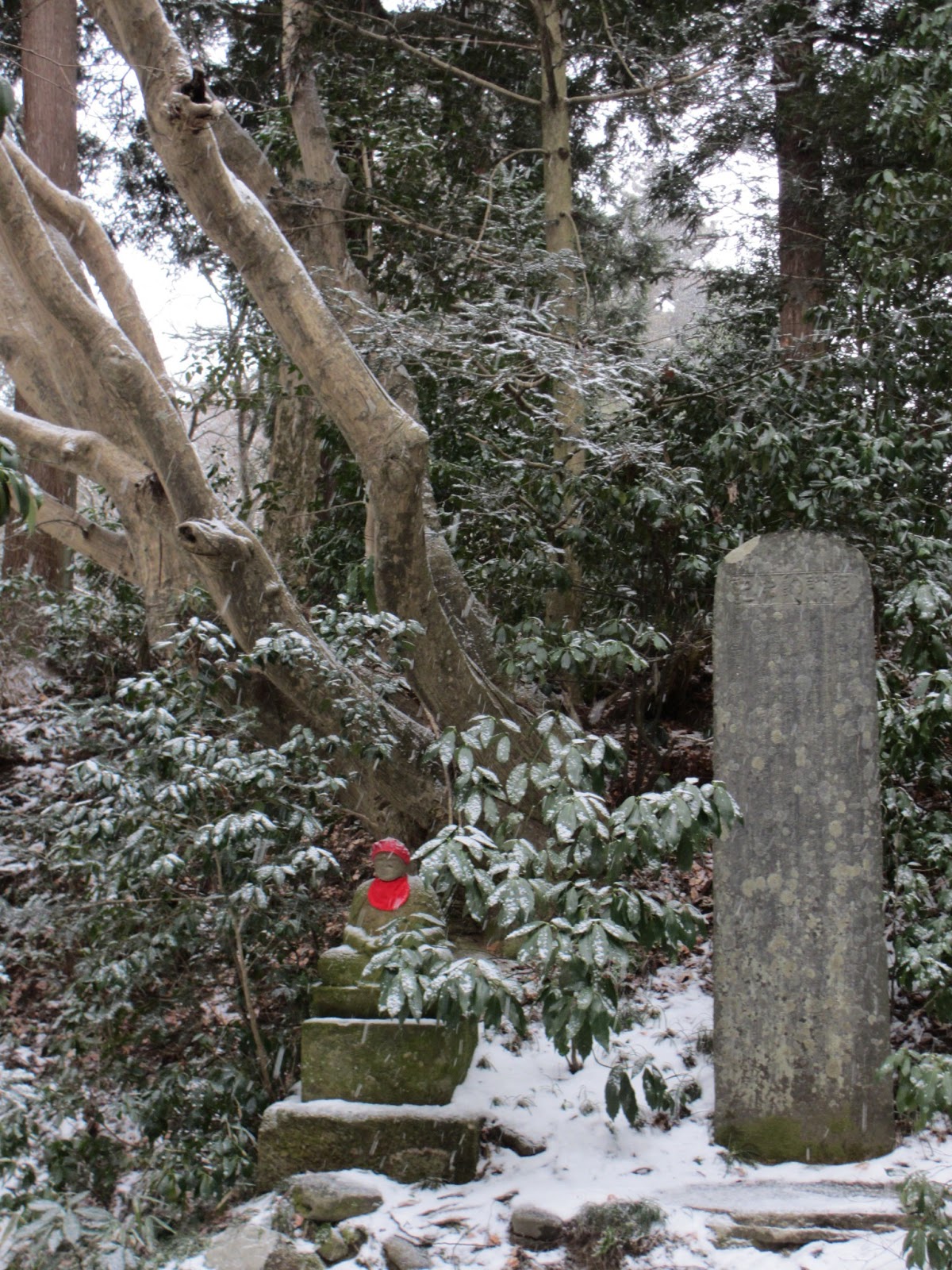 |
| Gravestone and Buddha (they often dress Buddha statues in hats and bibs) |
 |
| Frog statue covered in snow |
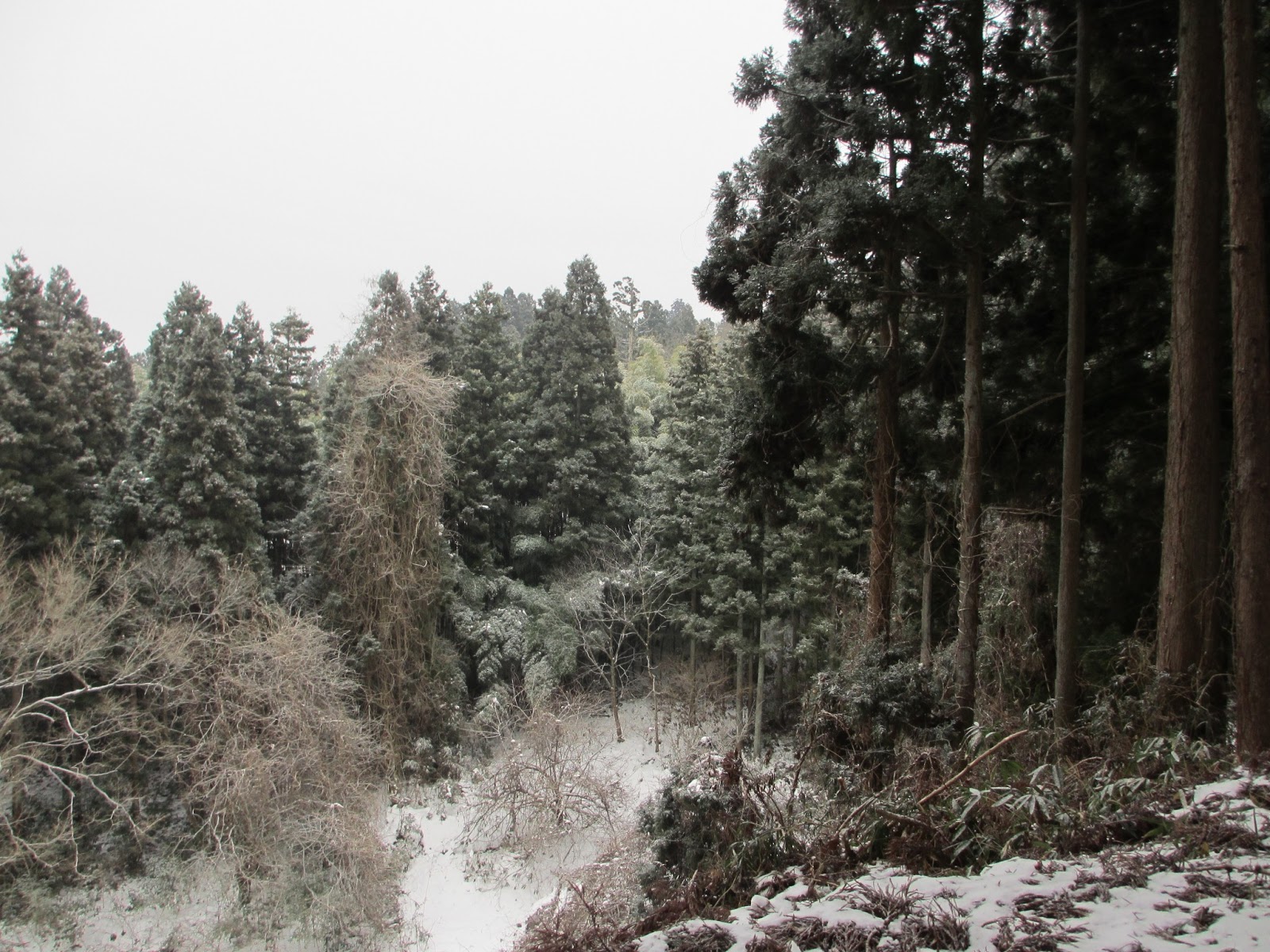 |
| The countryside is beautiful, full of pines covered in snow |
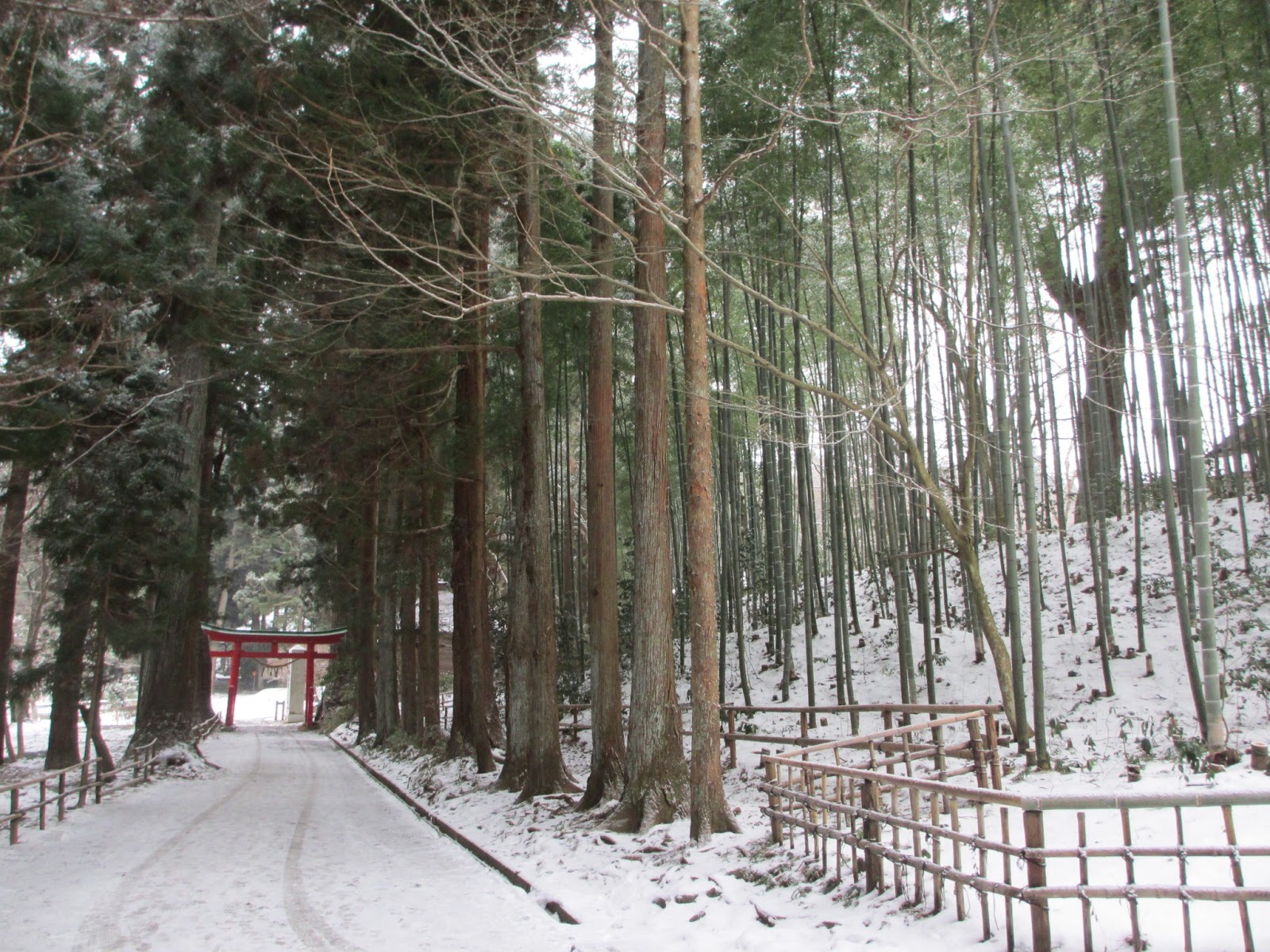 |
| Bamboo, pine and a torii: this is the Japan of my imagination |
 |
| Shrine to Yoshitsune's lieutenant Benkei (think Robin Hood and Little John) |
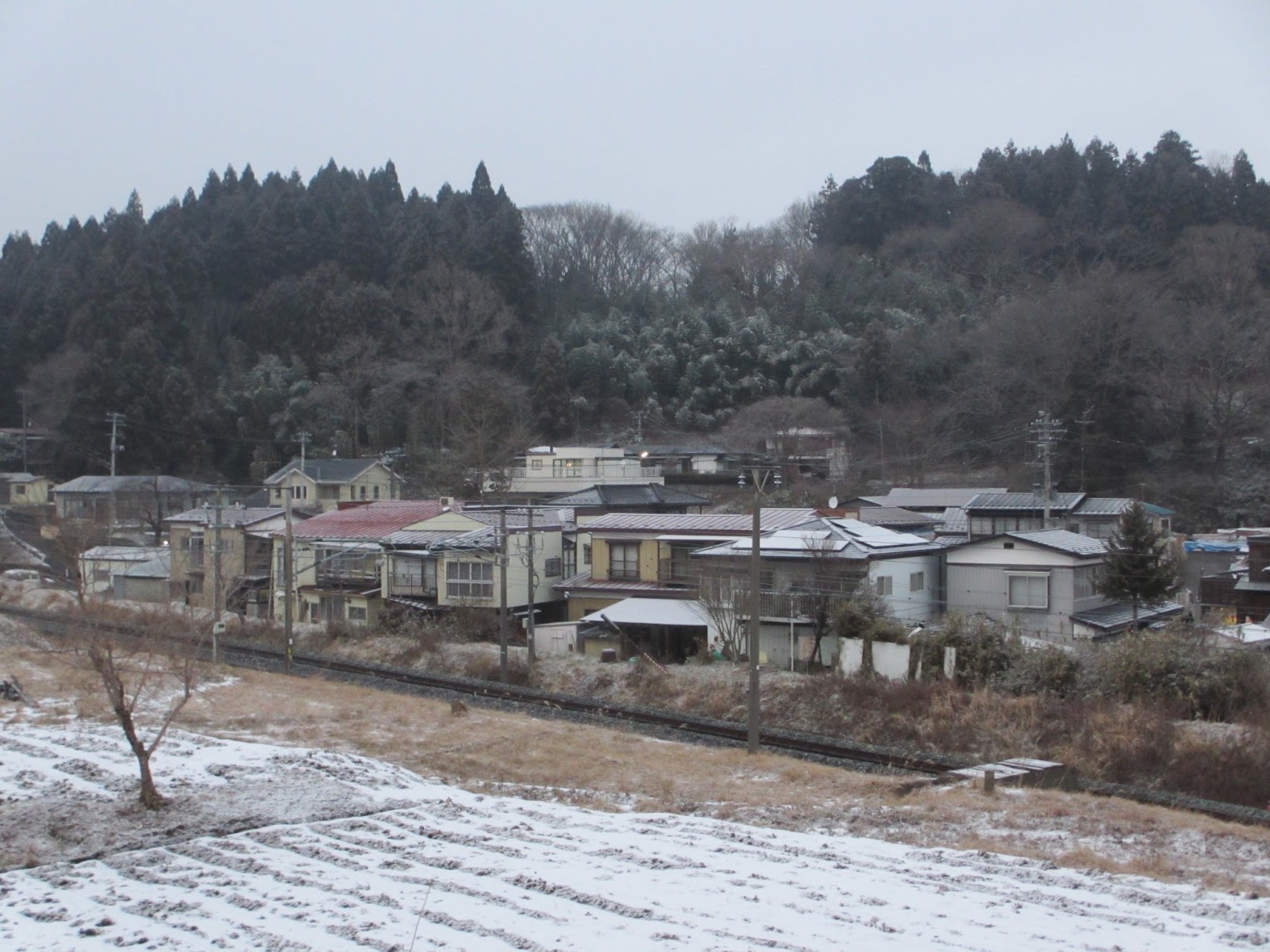 |
| Yoshitsune's grave is on a hill just beyond the town: the poet Basho wrote the famous haiku: "The summer grasses/All that remains/Of brave soldiers' dreams" when visiting it in 1689 |
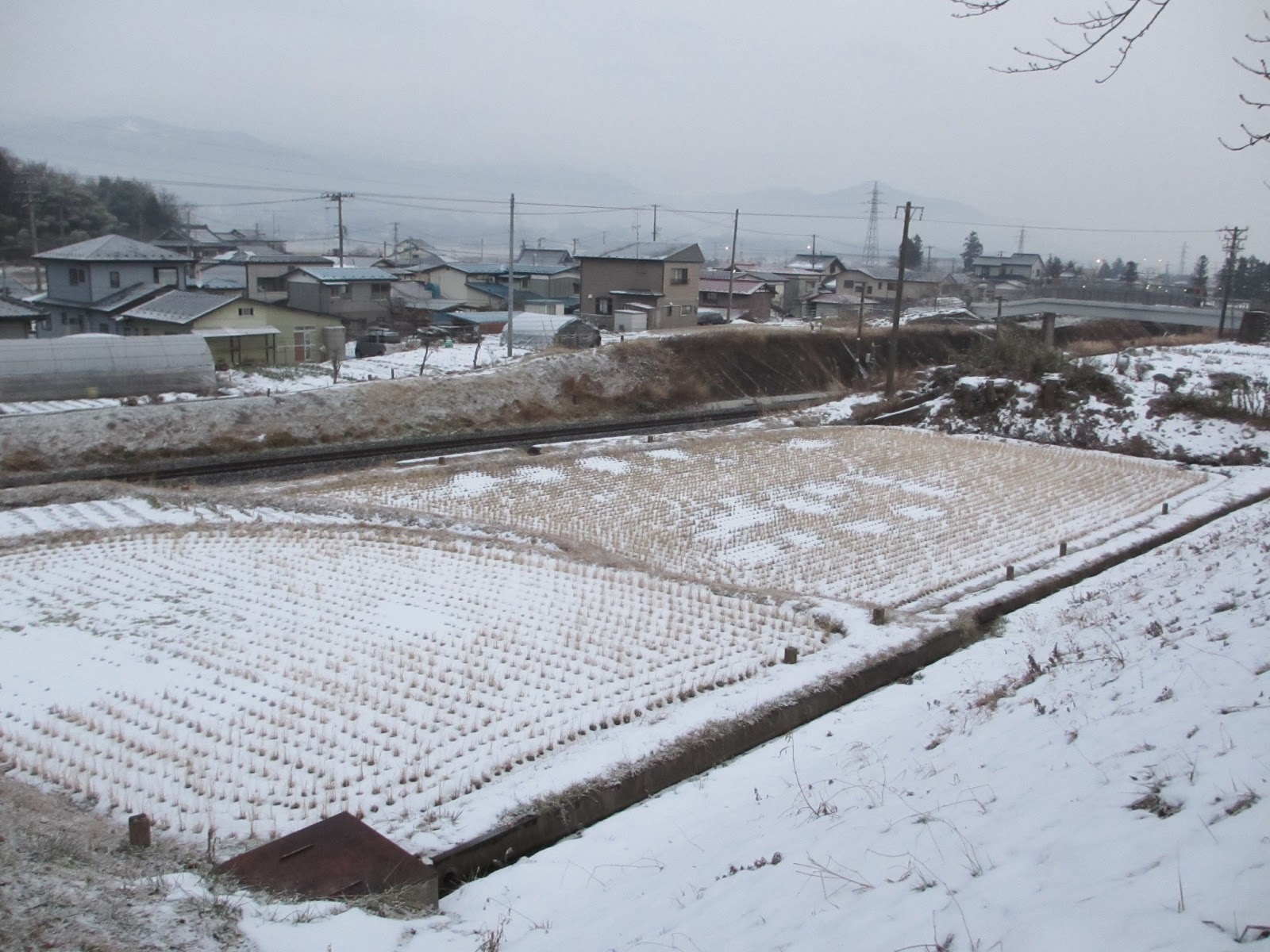 |
| It's really rural now: here's some rice fields right in the center of town |
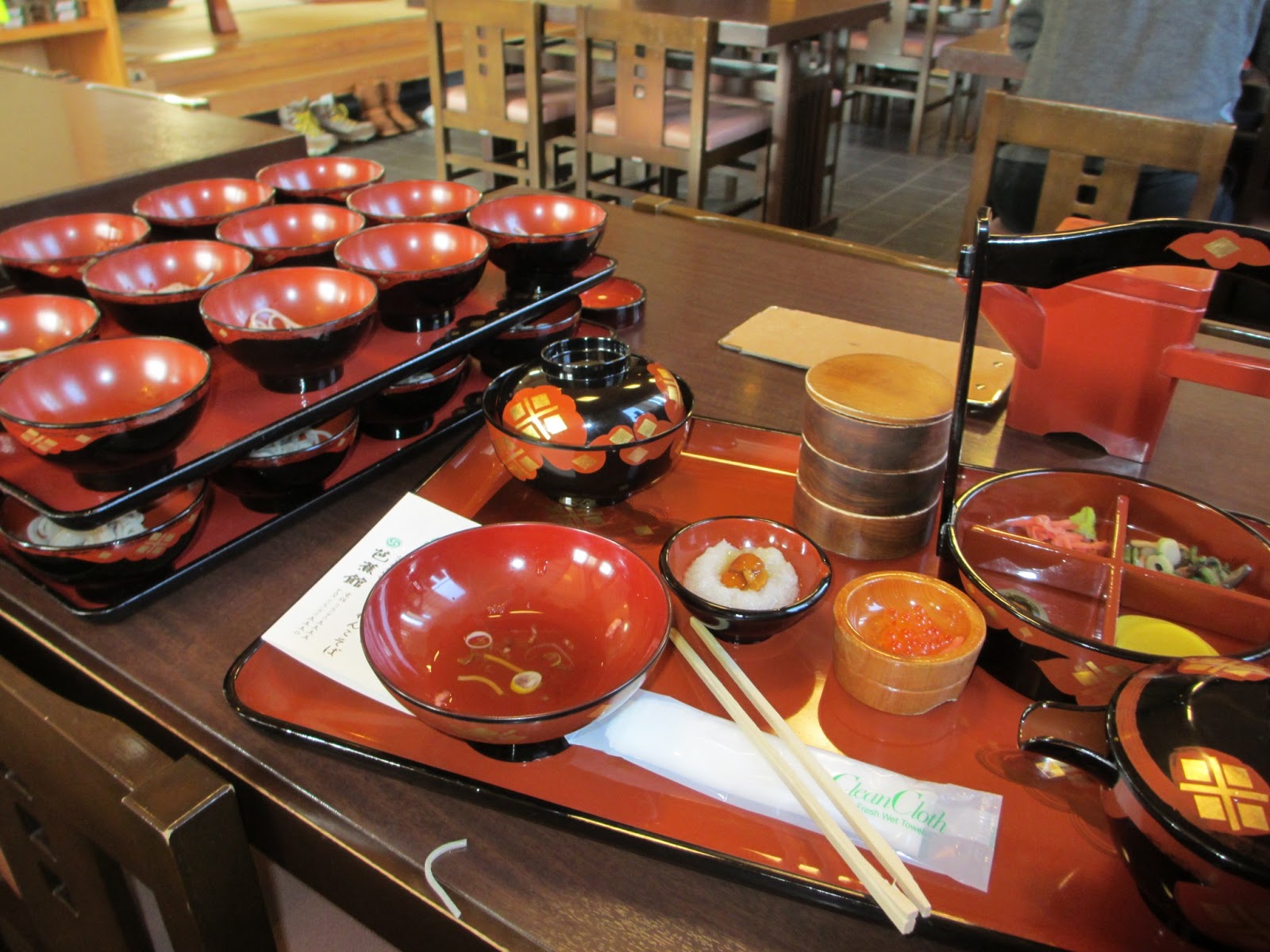 |
| I lunched on a form of soba (buckwheat noodles) which is a specialty of the region: you are served unlimited small portions of soba (the bowls on trays to the left), then flavor to your own taste with the included toppings (on the tray to the right). Toppings include pickled ginger, caviar, onions, pickled vegetables, shaved radish, raw fish, dried fish, various sauces, etc. |
 |
| The restaurant I ate at (it got really crowded shortly thereafter with dozens of Japanese slurping noodles at a tremendous rate: people take pride in how many bowls they can pack away. The waitress teased me because I could only eat 1.5 trays.) |
Tuesday, December 4, 2012
Sentosa's Fort Siloso
I checked off another museum in Singapore last weekend: Fort Siloso! This was one of the WW2-era British forts built to protect their then-colony (supposed to be an "impregnable fortress").
 Sadly for their plans, while Singapore was heavily defended from any sea attacks, the British neglected any defense on the land side (facing Malaysia). Which is where the Japanese invaded from (via bicycle: they even hauled their large guns in bicycle-pulled carts). Oops!
So Fort Siloso turned out to have no purpose (and was not really damaged during the invasion). Now it's a museum, so I went there with R and a friend of mine (and her baby). It's on Sentosa (Singapore's equivalent to Coney Island) but being a historical museum does not attract many visitors. Actually it was mostly deserted, even though it was a weekend afternoon and the rest of the island was terribly crowded.
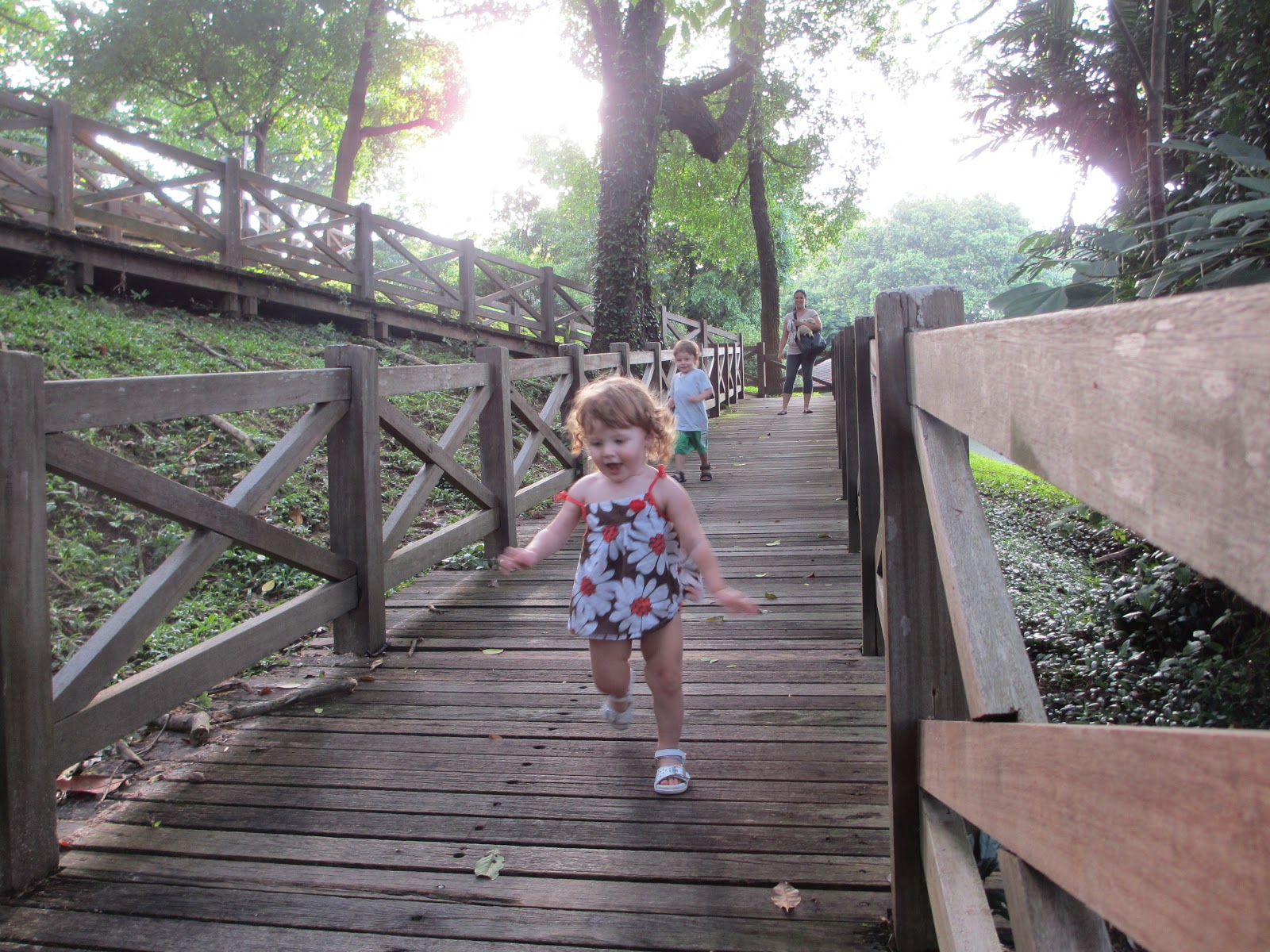
This was nice because then we could let the children roam freely without disturbing anyone. They had a wonderful time touching the soldier statues and playing tag.


The highlight for the other toddler was a (free) ride on the vintage tram (which takes you from the main entrance for like 500 feet, but Singaporeans hate walking).
 Fort Siloso probably isn't worth a special trip unless you have a particular interest in WW2 history, but it's a nice break from the tackiness and crowds of the rest of Sentosa.
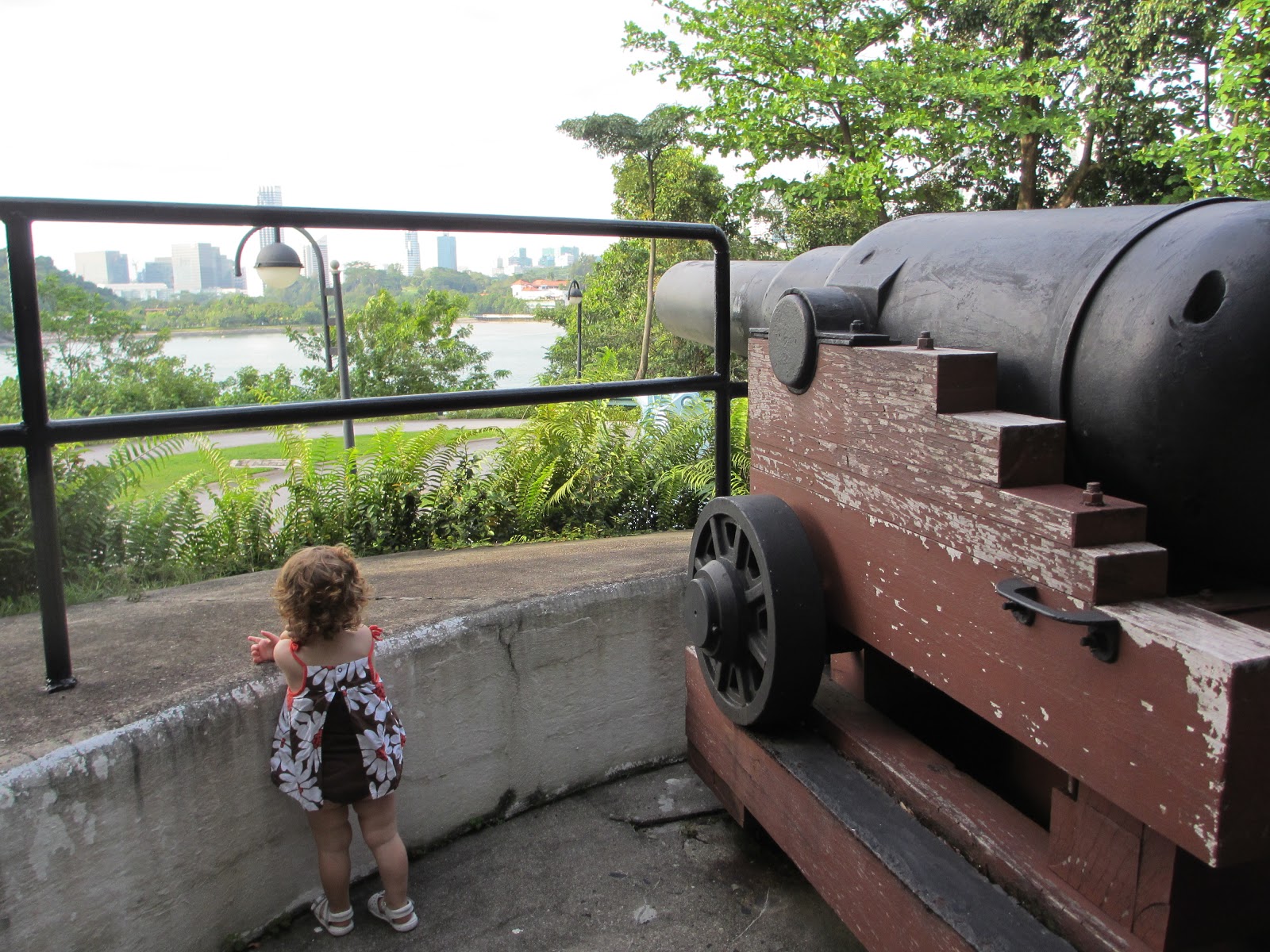
 |
| Some of the guns, expensive and high tech at the time but now just scrap metal |
 |
| Depiction of typical staff at the fort: drunken British soldier (chugging liquor) and Chinese coolie to do the work |
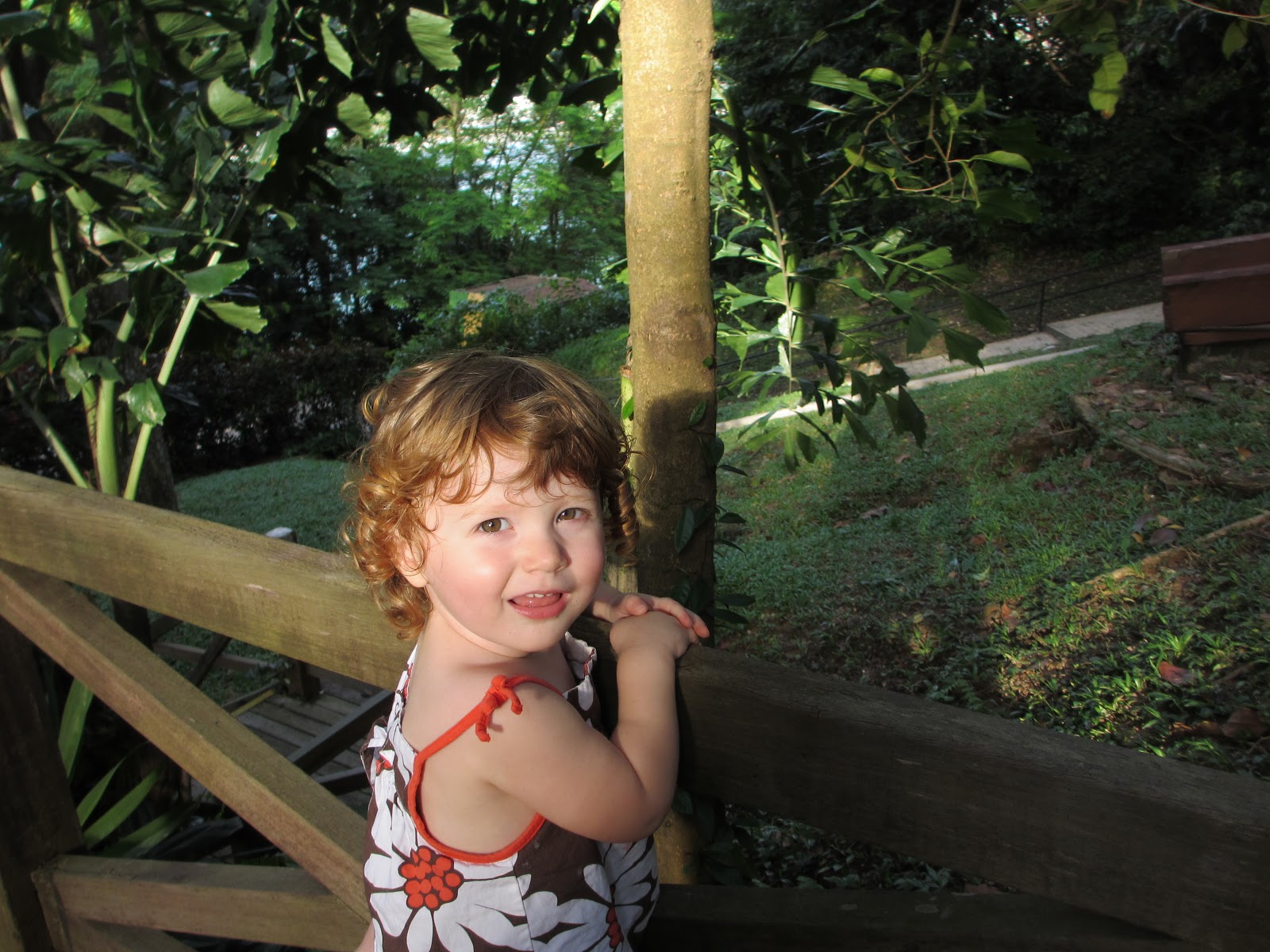 |
| It's surrounded by greenery |
 |
| Museum exhibit: R liked the dog |

 |
| Blurry (sad) but isn't she cute? |

 |
| R on one of Sentosa's (artificial) beaches: not very nice to swim there though due to the oil processing plant nearby |
Tuesday, October 2, 2012
I Throw Out R's Art
Now that R is in school, she comes home most days with various "artworks". She isn't old enough to make anything that looks good, or to even have a meaningful artistic sense. Her projects mostly involve things like scribbling randomly with paint (and then the teachers cut into some shape) or gluing stuff randomly (and the teachers try to guide her into gluing it in a more logical fashion). Art at this point is just about experimenting with materials, not creative self expression or making something beautiful.
That's great of course, and I'm really happy that she gets a chance to do that at school (I don't want to do art projects at home due to the mess/laziness factor: crayons are enough for me). But since her "art" is both pretty ugly and not a reflection of her thoughts, I don't like it.
I admire it when she brings it home, and talk to her about it. We point out various interesting elements. Then we put it up on the refrigerator. Soon (often overnight) it disappears. Where? Into the trash. I haven't saved any of it.
Once she's big enough to make something more sophisticated, maybe I will save that. For now, I feel like it's just clutter.
 |
| "Drawing" made at home |
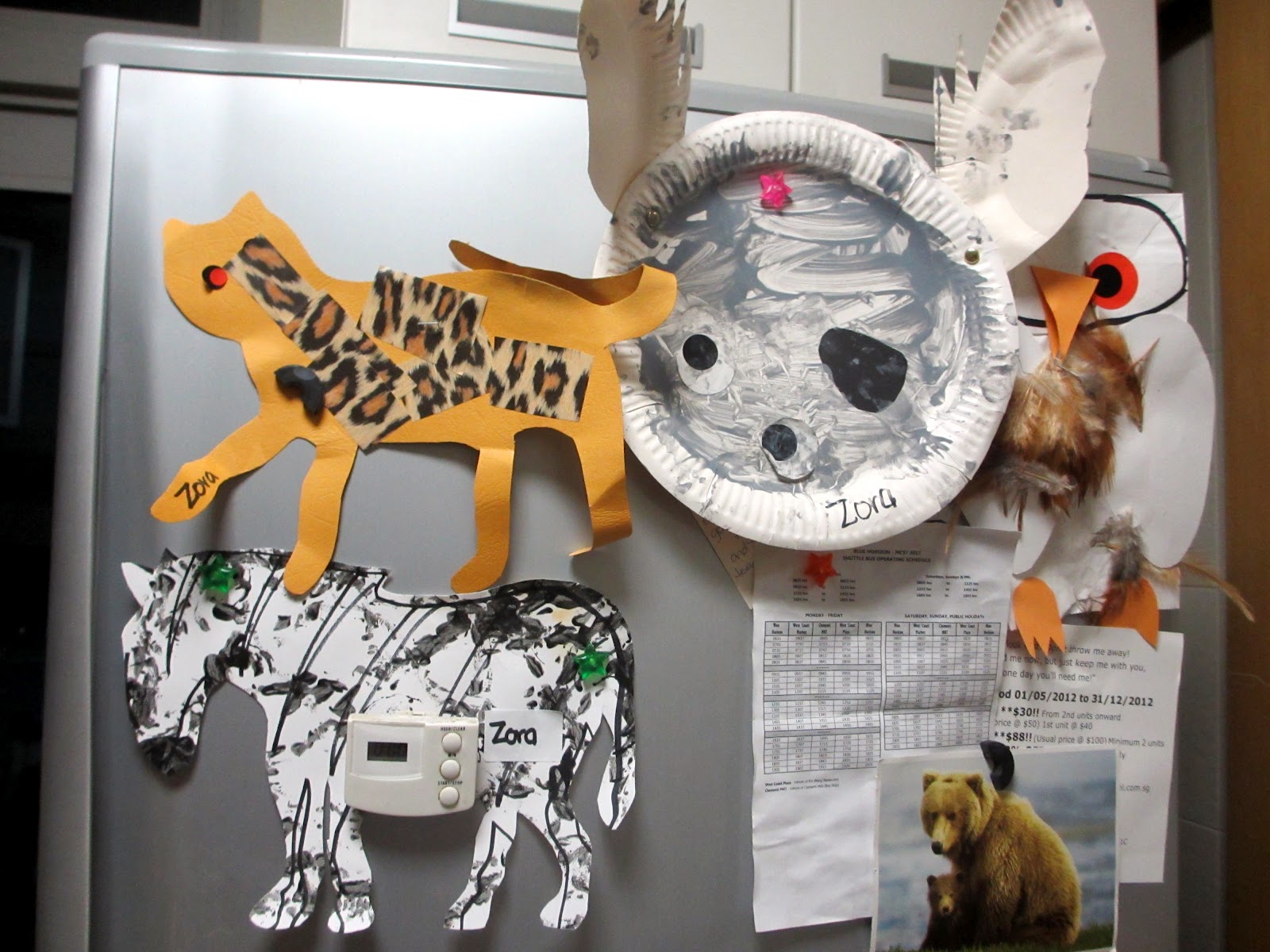 |
| Big shipment yesterday! |
Once she's big enough to make something more sophisticated, maybe I will save that. For now, I feel like it's just clutter.
Tuesday, September 4, 2012
Singapore's Tragic History
 |
| Chapel at Changi Museum |
Singapore was then a British colony and a harbor of the greatest importance. Britain being a sea-based empire, Singapore was seen as key to the strategic defense of Southeast Asia, and so millions were spent on the construction of various forts, guns, bunkers and the like to convert the island into a "impregnable fortress". It was the major British military base for the entire region.
In one of the worst ever British military disasters (and probably the worst of WW2), Singapore nevertheless fell to the Japanese in just seven days. About 80,000 British (and allied) troops were taken prisoner (the largest surrender ever in British history): humiliatingly, the invading Japanese had only 30,000 (much better trained) soldiers. Many of the POWs (around a third) would die in Japanese custody as a result of starvation, disease, torture and overwork.
 |
| Candles for the dead at Changi |
The Japanese marked their victory with looting, indiscriminate killings (including everyone at a local hospital, even the surgeons and those in the midst of surgery), and a massacre of the "hostile elements" in the Chinese population (the exact number is unknown, but probably 50,000-100,000). Almost all the white population (all American, Australian, and British civilians, including women and children) were sent to prison, where there was little food, no medical care, and rampant overcrowding. The rest of the population didn't fare much better, with malnutrition, "disappearances", constant casual violence (by Japanese soldiers), and economic breakdown being the order of the day. The return of the British was hailed with relief and widespread rejoicing.
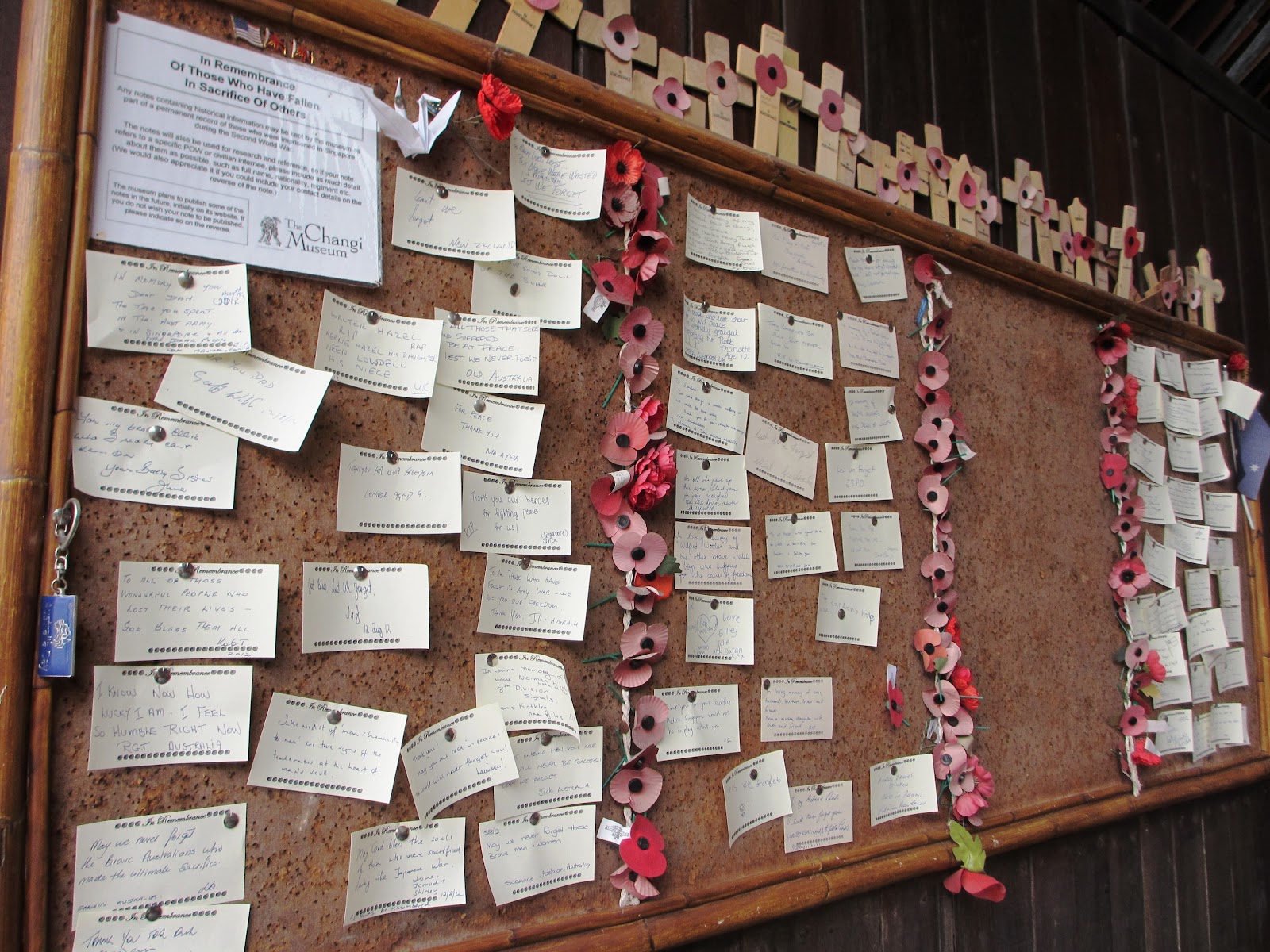 |
| Handwritten messages from POWs and their relatives: it's a place of pilgrimage for some |
There are a number of museums and sites about this history: the one I visited most recently was Changi Museum. Built by the British as a prison, it housed first the civilian detainees and later the POWs, and was therefore the site of many tragic events. Today it's a museum (and chapel, to commemorate all the dead). It's an interesting if somber place.
 |
| Cross hand-made out of scrap by a POW: he died in custody |
Subscribe to:
Posts (Atom)