R makes constant appearances on the blog, but B is more of a lurking presence. Partly this is intentional (because I choose not to put his picture online, and otherwise maintain his privacy), and partly because I find it easier to talk about motherhood than marriage.
But it's a pity, because to me B is a very interesting character. He frequently drives me crazy, and I don't always feel loving (or even friendly, going for the jugular instead), but since I met him I have found the twists and turns of his mind endlessly fascinating. It's like studying a painting by Brueghel: the longer you look at it, the more there is to see and the more layers of meaning are uncovered.
I met B's roommate first, and naturally asked him what B was like. "Well," he said, "he's really smart...but he's a little weird. He's cool though." This is a good basic description.
B is really smart, the kind of person who gets an almost perfect score on his SAT despite taking it hungover and without studying (this was during his dissolute high school years). He was a scientist (actually there's a paper published in a major journal for which he was a co-author); now he's an economist. He speaks (and reads, which is much harder) fluent Chinese and is a voracious reader (he's read all of Gibbon, Dostoevsky, Hoffmann and most of Balzac, among other things).
He is also definitely eccentric. There's the way he doesn't care about clothes, social norms or other people's opinions, the way he used to eat pancakes for every meal to save money, the way he doesn't hear people when they are talking (because he's so wrapped up in his own thoughts: his parents used to call him the "absent-minded professor"). He has unusual interests (Bitcoin, pharmacology, cotton mills, 1950s Japanese cinema among others), and when he's into something, pursues it with a single-minded, almost obsessive focus, thinking about it almost every waking minute.
There's other aspects to his character too: his sensitivity (he usually knows what I'm feeling better than I do, to the point I regularly ask him what my feelings are), his loyalty (once B likes something/someone, he likes it forever), his critical nature (because B's list of approved things may be stable, but it's short), his cynicism, his playfulness.
We've been a couple for all of our adult lives and been through so much together: cancer scares, surgeries in foreign countries, childbirth, family drama of all types (death, divorce, insanity, addiction and so on), living abroad, depression...I love him, of course, but more than that, he is a part of myself. It's hard to imagine life without him, or even myself without him (because for better or worse, our relationship has shaped me in so many ways).
This post is part of Becoming Peculiar's Meet the Spouse prompt.
Showing posts with label marriage. Show all posts
Showing posts with label marriage. Show all posts
Thursday, February 14, 2013

Saturday, December 8, 2012
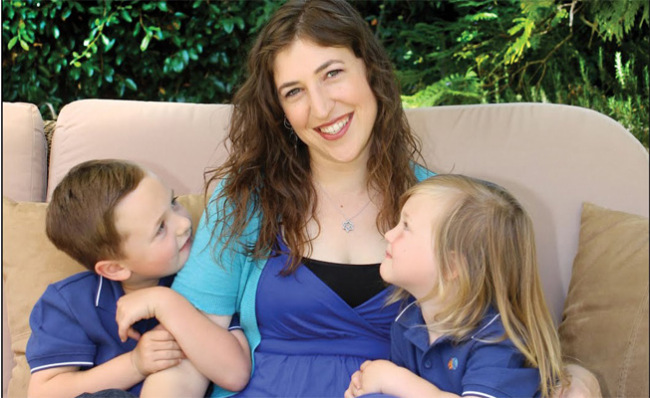
Mayim Bialik Is a Bad Parent
I read Mayim Bialik's book on attachment parenting just recently. Yesterday I saw that she and her husband are getting divorced.
 As someone who's into parenting enough to write a whole book about it, her decision completely befuddles me. The effects of divorce on children are really, really bad. This is true even in the best case scenario (where the parents get along well, live close to each other and provide a stable situation post-divorce).
Of course, some situations do require drastic action (for instance, untreated mental illness, addiction or unceasing violent conflict, whether verbal or physical). But I doubt this is the case for Bialik, since she is asking for joint custody (meaning she considers her husband reliable enough to be solely responsible for their small children). Plus, in her book (written this year!) she goes on and on about how gentle, considerate, and responsible her husband is (of course, it could be all lies but let's assume not). Whatever is wrong, it's not due to serious character defects of the type that merit divorce.
Marriage is about a lot of things: love, companionship, finances, an efficient division of labor...But one of its main purposes is to provide a stable environment for children. Children in other societies thrive without securely married parents, but that's because those societies are very different from our own (usually the children are embedded in a secure framework of extended family, where the role of parents in raising children is relatively much less important). In modern America, providing your children with the best environment and upbringing means providing them with married parents. (For example, virtually all students at top universities have married parents, even though half the population has divorced parents.)
In other words, being a good parent generally means staying married. The ability to create and maintain a happy intimate relationship is actually the most important parenting decision you will ever make. Bialik obviously cares deeply about being a good parent: but she is investing her efforts in the wrong areas (homeschooling, for instance), and as a result is having a massive parenting fail.
Of course, some situations do require drastic action (for instance, untreated mental illness, addiction or unceasing violent conflict, whether verbal or physical). But I doubt this is the case for Bialik, since she is asking for joint custody (meaning she considers her husband reliable enough to be solely responsible for their small children). Plus, in her book (written this year!) she goes on and on about how gentle, considerate, and responsible her husband is (of course, it could be all lies but let's assume not). Whatever is wrong, it's not due to serious character defects of the type that merit divorce.
Marriage is about a lot of things: love, companionship, finances, an efficient division of labor...But one of its main purposes is to provide a stable environment for children. Children in other societies thrive without securely married parents, but that's because those societies are very different from our own (usually the children are embedded in a secure framework of extended family, where the role of parents in raising children is relatively much less important). In modern America, providing your children with the best environment and upbringing means providing them with married parents. (For example, virtually all students at top universities have married parents, even though half the population has divorced parents.)
In other words, being a good parent generally means staying married. The ability to create and maintain a happy intimate relationship is actually the most important parenting decision you will ever make. Bialik obviously cares deeply about being a good parent: but she is investing her efforts in the wrong areas (homeschooling, for instance), and as a result is having a massive parenting fail.
Thursday, December 6, 2012
The Five Love Languages, Gary Chapman
 On Amy's recommendation, I got The 5 Love Languages from the library. I finished reading it yesterday.
I was pretty dubious about the book (not only is the title stupid, but the cover looks like a cheesy romance novel). And of course the author has no evidence for any of his recommendations or theories. In fact, he often doesn't even have evidence from his personal experience (according to his stories, he gives many couples advice after knowing them for only a few hours, then never sees them again).
But it was helpful and interesting. One of our main problems is that while each of us thinks we are being considerate, loving and self-sacrificing, the other person has a completely different perception and feels ignored, unloved and embittered. The love languages book provides a convincing explanation for this phenomenon (each person feels loved only when that love is expressed in a particular way, and since there are five possibilities, mismatches are common).
We took the test: my love language is Quality Time, with a second place of Words of Affirmation. B's language is Physical Touch, with Acts of Service, Quality Time, and Words of Affirmation tied for second. We both are completely uninterested in Gifts (we almost never give each other presents--I just buy them for myself; B hates spending money--and don't even have wedding rings).
No surprises there, but good to have it spelled out: especially because we are totally incompatible, meaning our natural impulses are not at all helpful. I hope this will help us express our feelings of love more effectively!
Friday, November 2, 2012
Romantic Love Versus Mother Love
I wrote a while ago about how I loved my husband more than my child, which was certainly how I felt at the time. R was only a few months old then though, and now that she's older, with more personality, and we've had longer to bond (important as I'm usually slow-to-warm-up to people), this isn't true anymore. I love them equally now, though the feelings are very different.
I find mother love quite straightforward and don't really expect much from R in terms of emotional gratification. Of course I get totally fed up with her from time to time, but for the most part things are smooth and easy. I've only lost my temper with her a few times and while naturally we disagree occasionally, for the most part we are in close harmony.
With B, though, everything is quite different: passionate, full of emotional turmoil, screaming fights, laughing until we are dizzy, staying up until 3 am telling each other our most intimate secrets...Maybe because we met so young, we are very closely bonded. But our relationship has also preserved a lot of teenage-type emo drama (me storming out of the house telling him he's betrayed my trust in the most fundamental way, and I will carry that forever!!!: this was a fight over him forgetting to buy soy milk, and yes it was only a few months ago).
I was chatting online with someone about cheating spouses, and it occurred to me that infidelity is never a concern of mine. Even if B were to cheat on me (most unlikely), it wouldn't really matter because I know that body and soul B belongs to me. It's kind of like the way making a new friend doesn't really affect your relationship with your sister or mother.
The other side of it is that B doesn't have time to have a mistress, not just because of his job, child and other obligations, but because he already has one: me. Due to the way our relationship works, it's incredibly time-consuming. We spend SO much time on each other (which hasn't really changed since having a child: often a problem as now we have less time total, and so that time frequently comes at a cost of either sleep or productivity).
I wonder if this mellows out for most people, or if their relationship didn't work that way in the first place?
I find mother love quite straightforward and don't really expect much from R in terms of emotional gratification. Of course I get totally fed up with her from time to time, but for the most part things are smooth and easy. I've only lost my temper with her a few times and while naturally we disagree occasionally, for the most part we are in close harmony.
With B, though, everything is quite different: passionate, full of emotional turmoil, screaming fights, laughing until we are dizzy, staying up until 3 am telling each other our most intimate secrets...Maybe because we met so young, we are very closely bonded. But our relationship has also preserved a lot of teenage-type emo drama (me storming out of the house telling him he's betrayed my trust in the most fundamental way, and I will carry that forever!!!: this was a fight over him forgetting to buy soy milk, and yes it was only a few months ago).
I was chatting online with someone about cheating spouses, and it occurred to me that infidelity is never a concern of mine. Even if B were to cheat on me (most unlikely), it wouldn't really matter because I know that body and soul B belongs to me. It's kind of like the way making a new friend doesn't really affect your relationship with your sister or mother.
The other side of it is that B doesn't have time to have a mistress, not just because of his job, child and other obligations, but because he already has one: me. Due to the way our relationship works, it's incredibly time-consuming. We spend SO much time on each other (which hasn't really changed since having a child: often a problem as now we have less time total, and so that time frequently comes at a cost of either sleep or productivity).
I wonder if this mellows out for most people, or if their relationship didn't work that way in the first place?
Tuesday, October 9, 2012
Marriage Means Your Life Is No Longer Your Own
One of the main challenges B and I have had in our relationship is in working together as a team. This seems like a pretty obvious part of marriage: it's mentioned in most marriage vows, you are legally considered as one unit (for instance, you can't be required to testify against your spouse), all money and debts belong to both spouses... But for me it's been a struggle.
Being on a team is of course nice (security, companionship, practical support, division of labor, etc), but it comes with a big downside: you can no longer be independent. In fact, the main problem with being married is that your life no longer really belongs to you.
You can still do pretty much anything you feel like, but now with one great caveat: you must get someone else's permission. This doesn't mean that I always have to ask B, "Can I buy this potato, please, honey?" But it does mean I always have to act like I am asking this question (would this be OK with B?). And he has to do the same. This isn't because someone came down with a rulebook and imposed the law on us; it's for purely practical reasons. We have tried (many times) over the course of our relationship to act differently, where we each make our own decisions and "follow our bliss" and so on. It's always been a complete disaster.
Because marriage is such an intimate relationship, anything I do will have an effect on B. Even something as petty as eating all the bread for a midnight snack means that there won't be any sandwiches for him the next day. I can't "follow my bliss" freely, because by doing so I am necessarily ruling out many possibilities for B. Actually I can't even eat (or sleep, or buy stuff) freely, for the same reasons.
I frequently find this aspect of marriage maddening. I don't want to think about other people all the time, and I hate the feeling of responsibility that comes with this. I can't even eat ice cream if I feel like it, because it makes me sick, meaning I can't fulfill my responsibilities well, meaning I am a bad wife, meaning B is affected...I am no longer fully free to chart the course of my own life, as now I have a co-pilot with his own (frequently entirely different) opinions.
No man is actually an island, but as a modern American it often feels like it. We don't generally stress our responsibilities to others, or our interdependence. The very idea of a "self-made man" is the complete opposite. But in marriage there are no "self-made men": any success or failure I have is B's too, and vice versa. This scares me: it's like tying yourself to another person as you climb a mountain. If the other slips, you will be in a world of trouble. The dependency, and trust, involved is really frightening.
Being on a team is of course nice (security, companionship, practical support, division of labor, etc), but it comes with a big downside: you can no longer be independent. In fact, the main problem with being married is that your life no longer really belongs to you.
You can still do pretty much anything you feel like, but now with one great caveat: you must get someone else's permission. This doesn't mean that I always have to ask B, "Can I buy this potato, please, honey?" But it does mean I always have to act like I am asking this question (would this be OK with B?). And he has to do the same. This isn't because someone came down with a rulebook and imposed the law on us; it's for purely practical reasons. We have tried (many times) over the course of our relationship to act differently, where we each make our own decisions and "follow our bliss" and so on. It's always been a complete disaster.
Because marriage is such an intimate relationship, anything I do will have an effect on B. Even something as petty as eating all the bread for a midnight snack means that there won't be any sandwiches for him the next day. I can't "follow my bliss" freely, because by doing so I am necessarily ruling out many possibilities for B. Actually I can't even eat (or sleep, or buy stuff) freely, for the same reasons.
I frequently find this aspect of marriage maddening. I don't want to think about other people all the time, and I hate the feeling of responsibility that comes with this. I can't even eat ice cream if I feel like it, because it makes me sick, meaning I can't fulfill my responsibilities well, meaning I am a bad wife, meaning B is affected...I am no longer fully free to chart the course of my own life, as now I have a co-pilot with his own (frequently entirely different) opinions.
No man is actually an island, but as a modern American it often feels like it. We don't generally stress our responsibilities to others, or our interdependence. The very idea of a "self-made man" is the complete opposite. But in marriage there are no "self-made men": any success or failure I have is B's too, and vice versa. This scares me: it's like tying yourself to another person as you climb a mountain. If the other slips, you will be in a world of trouble. The dependency, and trust, involved is really frightening.
Sunday, September 30, 2012
Why I Haven't Written More about Marriage
I am about equally interested in marriage and parenting, but I blog so much more about parenting and little R. Partly this is because being a mother is new to me (since I've only been doing it for 19 months), while B and I have been together for 14 (I think, sorry we are both lame and don't quite remember) years.
Mostly, though, it's because I have a hard time writing about marriage. I wrote before that I find parenting pretty straightforward. It's difficult, yes, but not complicated. The basic rule is that at all times, in every circumstance, you as the parent must be on your best behavior: patient, firm but just, thoughtful, intensely interested in every nuance, and most of all endlessly loving. Think the common description of God, and there you go. (One reason why it's difficult is because no one can pull this off consistently.) Failure is naturally common, but at least you know what you're supposed to be doing.
With marriage, I honestly have no idea. I am not sure what behavior would qualify me as a "good wife" (or what B should do, to be a "good husband"). We each know what we want the other to do of course, but are our expectations reasonable? I don't know. People are very unlikely to be honest about their expectations, even to themselves, so asking others won't get you very far. And at this point in time there's really no culturally sanctioned expectations: everything depends on who you ask. I wouldn't ask R for her definition of a "good mother" (which would probably include eating gummy bears for every meal, no diaper changes ever, and the inability to ever say no), but I ask B to define my "job" as wife all the time. Seems like a terrible idea of course, but lacking another definition I'm not sure how else to go about it.
The other trouble with discussing marriage is that everything has history. There's always a backstory: whenever B says something, it draws on the many years of experience we've had with each other for emotional tone, meaning that there's no such thing as a simple comment. Just a simple signal or a particular word can make both of us laugh, or start arguing, because it brings up a host of related experiences.
So if I recounted a sample interaction between the two of us, it by itself would tell you almost nothing. B saying X might mean X, or it might mean "I hate you", or "You are my ideal woman", or "Do you love me?", or "You drive me crazy". You would have to have knowledge of the dozens of prior interactions on the topic to know the real answer. Apparently shockingly insensitive behavior might not be, really, and apparently kind behavior might actually have a sadistic agenda (I have done both to B).
But I do find it frustrating that there is so little personal information available about marriages. Thousands of people write incredibly in-depth book-long screeds about being a parent (or mother, especially), and every emotional, physical and philosophical nuance of that journey. But I have read very few examples of the same for marriage, and yet it's one of the most important and long-lasting (the longest, if things go well) relationships in most people's lives.
I should try to write more often about it, if only to try to define what a good wife is (and isn't).
Mostly, though, it's because I have a hard time writing about marriage. I wrote before that I find parenting pretty straightforward. It's difficult, yes, but not complicated. The basic rule is that at all times, in every circumstance, you as the parent must be on your best behavior: patient, firm but just, thoughtful, intensely interested in every nuance, and most of all endlessly loving. Think the common description of God, and there you go. (One reason why it's difficult is because no one can pull this off consistently.) Failure is naturally common, but at least you know what you're supposed to be doing.
With marriage, I honestly have no idea. I am not sure what behavior would qualify me as a "good wife" (or what B should do, to be a "good husband"). We each know what we want the other to do of course, but are our expectations reasonable? I don't know. People are very unlikely to be honest about their expectations, even to themselves, so asking others won't get you very far. And at this point in time there's really no culturally sanctioned expectations: everything depends on who you ask. I wouldn't ask R for her definition of a "good mother" (which would probably include eating gummy bears for every meal, no diaper changes ever, and the inability to ever say no), but I ask B to define my "job" as wife all the time. Seems like a terrible idea of course, but lacking another definition I'm not sure how else to go about it.
The other trouble with discussing marriage is that everything has history. There's always a backstory: whenever B says something, it draws on the many years of experience we've had with each other for emotional tone, meaning that there's no such thing as a simple comment. Just a simple signal or a particular word can make both of us laugh, or start arguing, because it brings up a host of related experiences.
So if I recounted a sample interaction between the two of us, it by itself would tell you almost nothing. B saying X might mean X, or it might mean "I hate you", or "You are my ideal woman", or "Do you love me?", or "You drive me crazy". You would have to have knowledge of the dozens of prior interactions on the topic to know the real answer. Apparently shockingly insensitive behavior might not be, really, and apparently kind behavior might actually have a sadistic agenda (I have done both to B).
But I do find it frustrating that there is so little personal information available about marriages. Thousands of people write incredibly in-depth book-long screeds about being a parent (or mother, especially), and every emotional, physical and philosophical nuance of that journey. But I have read very few examples of the same for marriage, and yet it's one of the most important and long-lasting (the longest, if things go well) relationships in most people's lives.
I should try to write more often about it, if only to try to define what a good wife is (and isn't).
Monday, September 17, 2012
Thoughts on Marriage
B has been in Japan for the last week. I do a lot more around the house and most of the R-related stuff (not surprisingly, since I don't have a job!), so sometimes I tend to imagine that I do everything. Having him gone made me realize all he actually does--like all the cooking, all the food shopping, and all the bathtimes. Oops! I don't know what I was thinking either. (Being entitled?)
B came back at 2:30 in the morning last night, and now we are both happy. He had an enjoyable and professionally productive time, but we very much dislike being separated from each other. In a way this is strange, because when he is home, naturally we go out to dinner, have interesting conversations or go on mini-adventures. But most of the time we are hanging around the house doing chores or individually pursuing our hobbies/time-wasting endeavors (depending on your perspective), not really talking or interacting. During the day, most of our conversations are about logistics or R; at night (ie, after R is asleep) hours will go by without us speaking a word to each other.
Marriage is a lot like parenting. The 'big moments' (like romantic nights out, or lavish vacations) are fun and memorable, but basically marriage comes down to all the little moments. Being married, and why I want B around, is really about the 30-second hug breaks, the inside jokes, the mutual appreciation of cute rabbit videos, corruption stories from China and recent academic research, and the ability to just sit quietly in the same room, happy in the mundane pleasure of each other's presence.
If your relationship is about the big moments instead, then it will never last, because marriage (or any long-term relationship) is mostly boring. That's because life is mostly boring: you have to brush your teeth, get dressed in the morning, pay the bills, and do all the other little tasks that make up one's existence, whether you live a "typical" life in some suburb or a "glamorous" one as a globe-trotting traveler, fabulous artist, or world-renowned expert.
Marriage in particular isn't really about having fun together (though hopefully that's part of it): it's about working together. The old-school farmer who picked his wife because she was a "hard worker" knew what he was doing, even if it's a little off-putting to people with modern sensibilities. Where he perhaps erred was that it's pretty difficult to work so closely (in the way necessary in marriage) with someone who doesn't appeal to you in a sort of visceral, ultimately irrational way (what people call chemistry, I guess).
B came back at 2:30 in the morning last night, and now we are both happy. He had an enjoyable and professionally productive time, but we very much dislike being separated from each other. In a way this is strange, because when he is home, naturally we go out to dinner, have interesting conversations or go on mini-adventures. But most of the time we are hanging around the house doing chores or individually pursuing our hobbies/time-wasting endeavors (depending on your perspective), not really talking or interacting. During the day, most of our conversations are about logistics or R; at night (ie, after R is asleep) hours will go by without us speaking a word to each other.
Marriage is a lot like parenting. The 'big moments' (like romantic nights out, or lavish vacations) are fun and memorable, but basically marriage comes down to all the little moments. Being married, and why I want B around, is really about the 30-second hug breaks, the inside jokes, the mutual appreciation of cute rabbit videos, corruption stories from China and recent academic research, and the ability to just sit quietly in the same room, happy in the mundane pleasure of each other's presence.
If your relationship is about the big moments instead, then it will never last, because marriage (or any long-term relationship) is mostly boring. That's because life is mostly boring: you have to brush your teeth, get dressed in the morning, pay the bills, and do all the other little tasks that make up one's existence, whether you live a "typical" life in some suburb or a "glamorous" one as a globe-trotting traveler, fabulous artist, or world-renowned expert.
Marriage in particular isn't really about having fun together (though hopefully that's part of it): it's about working together. The old-school farmer who picked his wife because she was a "hard worker" knew what he was doing, even if it's a little off-putting to people with modern sensibilities. Where he perhaps erred was that it's pretty difficult to work so closely (in the way necessary in marriage) with someone who doesn't appeal to you in a sort of visceral, ultimately irrational way (what people call chemistry, I guess).
Thursday, July 26, 2012
Having a Life That Looks Like a Catalog
I read the blog Rockstar Diaries. I'm not a huge fan, but I enjoy it for the pretty pictures. However, from a more analytic perspective it's a very interesting site because it consistently portrays a particular aesthetic, heavily influenced by women's magazines, advertisements and an overall sentimentality.
I was curious about who reads it, so I looked this up on Alexa (because it's free; obviously it's not really the best source of information and not what I would use if my interest went beyond idle curiosity). Seems to be mostly young, educated women, who tend not to have children. This isn't surprising to me, because what Rockstar Diaries shows is a fantasy of a specialized kind, like the domestic equivalent of a romance novel.
I was thinking about this in particular when I saw her latest post, of the happy, perfect family just at sunset having fun in a lovely location, because sometimes B and I look like that too. We went out to dinner with R a few nights ago. We were all dressed well, me in high heels, makeup and a cute dress that coordinated with everyone's outfit. R was well behaved and greatly enjoyed her food in a polite and socially appropriate manner, while B and I animatedly conversed about various intellectual topics. After dinner, just as the sun was setting, we took R's hands and danced together on the lawn in front of the restaurant's patio as we laughed and laughed, the charming colonial architecture evident in the background (we were at Chijmes).
It looked like something out of a catalog, and while I don't know what the other people there actually thought, possibly they would have had a similar reaction to the typical one for Rockstar Diaries. I do know that at times people do have that reaction. One of our friends (while visiting us for a week) told us that we had a seemingly perfect relationship and family, that we seemed to truly like each other, and that he hoped to have the same someday.
Hahahahaha. Of course, B and I do truly like each other (most of the time...). But real life isn't like a catalog at all. R cries and has tantrums, my hair inevitably looks awful because I can't style it, B usually looks like a hobo... and those things aren't really the difference that's important.
The big difference is in the emotions supposedly portrayed by idyllic family photos showing mutual love and enjoyment and carefree happiness. Often B and I can't stand each other: some weeks we quarrel constantly about anything and everything. I start fantasizing about my new single life and make lists of everything that he does wrong and ways he's disappointed me; he tells me that I'm impossible to get along with or please, and locks himself in his study for hours to avoid having to interact with me. And R, darling and cute as she is, drives both of us crazy with her energy and neediness and naughtiness, until we start bickering over who gets to escape to the coffeehouse. (R is too small to talk, but I know that sometimes she feels the same way about both of us: fed up with our rules, our ineptitude, and general slowness/boringness. She's bitten both of us, after all.)
It's not that the idyllic family photos or memories are a lie: B and I really did dance with R on the sunset-lit lawn. But to focus just on that gives a completely false impression of how human relationships work. They are messy, and painful, and boring, and complicated. Whenever there is great intimacy, there is also the ability to cause great pain: and humans being what they are, great pain is thus pretty much a given.
I think that's why mostly young non-mothers like the Rockstar Diaries. People with more life experience know the truth: that even happy marriages are full of days (or weeks, or months) of mutual dislike; that often parents and children hate each other (though those feelings are rarely anything but transient); that the sand in the vacation photo got all over you and made you itch; that the babies screamed all night because they weren't at home in their accustomed cribs.
I don't get jealous of others very often (to be quite honest, because I am too snobby), but when I do, I want to remember that things are never as they seem. Everyone is full of misery and angst and suffering, at least some of the time, because life is like that.
I was curious about who reads it, so I looked this up on Alexa (because it's free; obviously it's not really the best source of information and not what I would use if my interest went beyond idle curiosity). Seems to be mostly young, educated women, who tend not to have children. This isn't surprising to me, because what Rockstar Diaries shows is a fantasy of a specialized kind, like the domestic equivalent of a romance novel.
I was thinking about this in particular when I saw her latest post, of the happy, perfect family just at sunset having fun in a lovely location, because sometimes B and I look like that too. We went out to dinner with R a few nights ago. We were all dressed well, me in high heels, makeup and a cute dress that coordinated with everyone's outfit. R was well behaved and greatly enjoyed her food in a polite and socially appropriate manner, while B and I animatedly conversed about various intellectual topics. After dinner, just as the sun was setting, we took R's hands and danced together on the lawn in front of the restaurant's patio as we laughed and laughed, the charming colonial architecture evident in the background (we were at Chijmes).
It looked like something out of a catalog, and while I don't know what the other people there actually thought, possibly they would have had a similar reaction to the typical one for Rockstar Diaries. I do know that at times people do have that reaction. One of our friends (while visiting us for a week) told us that we had a seemingly perfect relationship and family, that we seemed to truly like each other, and that he hoped to have the same someday.
Hahahahaha. Of course, B and I do truly like each other (most of the time...). But real life isn't like a catalog at all. R cries and has tantrums, my hair inevitably looks awful because I can't style it, B usually looks like a hobo... and those things aren't really the difference that's important.
The big difference is in the emotions supposedly portrayed by idyllic family photos showing mutual love and enjoyment and carefree happiness. Often B and I can't stand each other: some weeks we quarrel constantly about anything and everything. I start fantasizing about my new single life and make lists of everything that he does wrong and ways he's disappointed me; he tells me that I'm impossible to get along with or please, and locks himself in his study for hours to avoid having to interact with me. And R, darling and cute as she is, drives both of us crazy with her energy and neediness and naughtiness, until we start bickering over who gets to escape to the coffeehouse. (R is too small to talk, but I know that sometimes she feels the same way about both of us: fed up with our rules, our ineptitude, and general slowness/boringness. She's bitten both of us, after all.)
It's not that the idyllic family photos or memories are a lie: B and I really did dance with R on the sunset-lit lawn. But to focus just on that gives a completely false impression of how human relationships work. They are messy, and painful, and boring, and complicated. Whenever there is great intimacy, there is also the ability to cause great pain: and humans being what they are, great pain is thus pretty much a given.
I think that's why mostly young non-mothers like the Rockstar Diaries. People with more life experience know the truth: that even happy marriages are full of days (or weeks, or months) of mutual dislike; that often parents and children hate each other (though those feelings are rarely anything but transient); that the sand in the vacation photo got all over you and made you itch; that the babies screamed all night because they weren't at home in their accustomed cribs.
I don't get jealous of others very often (to be quite honest, because I am too snobby), but when I do, I want to remember that things are never as they seem. Everyone is full of misery and angst and suffering, at least some of the time, because life is like that.
Sunday, June 17, 2012
Happy Father's Day
 |
| R on Daddy's lap in the taxi: she loves him! |
I am very close to my own father, and will feel forever grateful to him for everything he's given me: a love of traveling, an interest in history and ancient cultures, appreciation for classical music, blues, opera, and world music, the ability to appreciate the little, subtle things in life. He helped me to become an independent person, including convincing my mother to let me go on my first international trip, which was a watershed in my life. He's always thought I was perfect in every way, and has invariably unconditionally accepted me, even in my most awkward, angry or confused moments.
It's not that uncommon for people to denigrate fathers (as my father pointed out to me in high school, they are invariably the butt of jokes on every TV show or commercial). There's a large group of people who think they're not even necessary. But as someone who had an involved, loving father, I know that it's an irreplaceable and precious relationship. My mother is wonderful too, but a father has a special role.
I really wanted the same for R, and am thankful every day that B is a wonderful, kind, caring father. He loves R with all his heart and tells her so every day. He definitely has a different parenting style than I do: he tends to challenge R a lot more (for instance, when she's trying to do something, he will just let her struggle; I am much more likely to jump in right away). He also assumes she's braver and tougher than I do, and will tickle her, toss her in the air, roughhouse with her, allow her to dunk herself under the water, and doesn't fuss if she skins her knee or gets bruised. Sometimes it horrifies me to watch them, but R thinks it's the most fun ever.
R is very sensitive to our differences, and already chooses who to go to depending on her needs. If she's sad or scared, she wants me; but for adventure, excitement and fun, she picks her father every time. She also really does live up (or down) to our expectations: because she knows that her father won't leap in to help her, she pushes herself just a little bit harder. Most of her new physical skills have been reached for the first time when he was watching her (not because he was pushing her, as he's very laissez-faire in that respect, but because she had the space to strive). Rather more annoyingly, she also whines a lot more at me, because she knows I will respond, while her father remains unaffected.
Already R has many of her father's tastes (she likes all the food he likes, disdains sub-par food just as he does, loves the water and exercise in general, and seems to have a similar sense of humor). She even looks like him (and doesn't resemble me that much). I am really looking forward to seeing the two of them continue to develop their relationship, and am so glad that R will always have at least one man in her life to love, support, protect and encourage her.
Thursday, May 24, 2012
Having Divorced Parents Can Kill You
A new book on longevity finds that the single factor most strongly predicting an early death is:
-- to have your parents divorce during your childhood. Yikes.
I've written about divorce before (or rather, divorce when you have children: divorce among the childless is an entirely different kettle of fish). One of the things that puzzles me about it is the level of denial among most people about its proven, extremely well-documented effects.
Divorce of a child's parents is highly traumatic for that child. Sometimes (especially in cases of abuse or unrelenting, severe conflict) it may be a necessary trauma, the way it can be necessary to get your leg amputated: but the fact remains that the child's life has been permanently, irredeemably altered, and that these effects will stay with them forever, into young adulthood and beyond.
Often when people announce they are getting a divorce, the response is one of congratulations and positivity. "Now you can start a new and better life!", people say. This is an appropriate response for marriages without children, I think, even though a divorce represents a significant personal failure (since everyone entering into marriage meant to be together forever, and made the most solemn promises to do just that, to themselves, their friends and families, and the state). Just like a failed job (one you were fired from or quit because you hated), the failure in this instance is disappointing and humiliating, but truly does represent a chance to try again, to learn from your mistakes, and to do it better. And for many people (like all the ones in happy second marriages), this proves to be the case.
But for people with children the response of hopefulness seems terribly tone-deaf and even cruel. For the adults, it may be the case that they will find better-suited partners and move on to happier lives. But for the children, a great disaster of epic proportions has just occurred, which will negatively affect the rest of their lives. Anyone who argues differently (saying things like "They are so young, they won't remember" or "They'll be happier because you're happier") is either lying or fooling themselves.
This doesn't mean that I think no one with children should get divorced (because sometimes it really is the only thing to do). But it does mean divorcing parents should expect that their children will likely have emotional and psychological problems afterwards; that the children will certainly undergo significant emotional pain and suffering; and that probably the children will direct these feelings of pain and suffering into anger at their parents and general bad behavior.
It also means divorced parents have a lot less leeway in their parenting, because their children are already operating under a huge disadvantage. Careful, thoughtful, child-focused parenting must become the order of the day in a way that is just not as essential for married parents. Maybe that's one reason why it's so difficult to be a single parent?
-- to have your parents divorce during your childhood. Yikes.
I've written about divorce before (or rather, divorce when you have children: divorce among the childless is an entirely different kettle of fish). One of the things that puzzles me about it is the level of denial among most people about its proven, extremely well-documented effects.
Divorce of a child's parents is highly traumatic for that child. Sometimes (especially in cases of abuse or unrelenting, severe conflict) it may be a necessary trauma, the way it can be necessary to get your leg amputated: but the fact remains that the child's life has been permanently, irredeemably altered, and that these effects will stay with them forever, into young adulthood and beyond.
Often when people announce they are getting a divorce, the response is one of congratulations and positivity. "Now you can start a new and better life!", people say. This is an appropriate response for marriages without children, I think, even though a divorce represents a significant personal failure (since everyone entering into marriage meant to be together forever, and made the most solemn promises to do just that, to themselves, their friends and families, and the state). Just like a failed job (one you were fired from or quit because you hated), the failure in this instance is disappointing and humiliating, but truly does represent a chance to try again, to learn from your mistakes, and to do it better. And for many people (like all the ones in happy second marriages), this proves to be the case.
But for people with children the response of hopefulness seems terribly tone-deaf and even cruel. For the adults, it may be the case that they will find better-suited partners and move on to happier lives. But for the children, a great disaster of epic proportions has just occurred, which will negatively affect the rest of their lives. Anyone who argues differently (saying things like "They are so young, they won't remember" or "They'll be happier because you're happier") is either lying or fooling themselves.
This doesn't mean that I think no one with children should get divorced (because sometimes it really is the only thing to do). But it does mean divorcing parents should expect that their children will likely have emotional and psychological problems afterwards; that the children will certainly undergo significant emotional pain and suffering; and that probably the children will direct these feelings of pain and suffering into anger at their parents and general bad behavior.
It also means divorced parents have a lot less leeway in their parenting, because their children are already operating under a huge disadvantage. Careful, thoughtful, child-focused parenting must become the order of the day in a way that is just not as essential for married parents. Maybe that's one reason why it's so difficult to be a single parent?
Tuesday, May 15, 2012
My Dark Side
I had a little meltdown today (because I'm dramatic like that) and to cope with my feelings started yelling at B. This sadly is a recurrent habit of mine (in fact, it was the impetus for one of my New Year's resolutions): I get stressed out about something, and feel overwhelmed by my feelings, and as a coping strategy decide that everything wrong is his fault. Blaming and yelling at him paradoxically makes me feel calmer and more in control of everything (at least in the moment: later I feel horribly guilty and full of shame). Of course it tends to have the opposite effect on B (since having your wife morph into a raging bitch viciously telling you that "all you do is try to ruin things for me" is not very soothing).
In a way it's just a bad habit: in other words, it's a coping strategy for dealing with stress (just like eating too much, or smoking), which has negative effects far outweighing the benefits it provides. I don't need to scream and yell (it's a choice, not a compulsion); I just do it because I get something out of it. Obviously I need to stop, because 1. it hurts others; 2. it makes me feel bad about myself; and 3. the costs of the strategy far outweigh the benefits.
I know why I do it (for the immediate soothing effect), but the interesting question really is, why does verbally abusing others (in this case, B) make me feel calm? It's pretty much a horrible thing to admit about yourself, I must say. Maybe because I feel out of control, and at least can have control over others (by causing certain emotional reactions in them)? I am not sure.
My mother did the same thing (to my father), and I think my grandmother did too (to my grandfather), so it's likely that it's in large part a learned behavior. This is one reason why I need to change my behavior--because otherwise little R will begin copying me.
I've actually made pretty good progress this year so far (this is the first incident in a long time), but obviously have a lot more work to do.
In a way it's just a bad habit: in other words, it's a coping strategy for dealing with stress (just like eating too much, or smoking), which has negative effects far outweighing the benefits it provides. I don't need to scream and yell (it's a choice, not a compulsion); I just do it because I get something out of it. Obviously I need to stop, because 1. it hurts others; 2. it makes me feel bad about myself; and 3. the costs of the strategy far outweigh the benefits.
I know why I do it (for the immediate soothing effect), but the interesting question really is, why does verbally abusing others (in this case, B) make me feel calm? It's pretty much a horrible thing to admit about yourself, I must say. Maybe because I feel out of control, and at least can have control over others (by causing certain emotional reactions in them)? I am not sure.
My mother did the same thing (to my father), and I think my grandmother did too (to my grandfather), so it's likely that it's in large part a learned behavior. This is one reason why I need to change my behavior--because otherwise little R will begin copying me.
I've actually made pretty good progress this year so far (this is the first incident in a long time), but obviously have a lot more work to do.
Friday, March 16, 2012
B Has a Birthday
Yesterday was B's birthday. Typically he hates all birthdays/holidays (or rather, is indifferent to them), but since I like holidays we celebrated anyway. I got him a bicycle seat for little R, a helmet for little R, and inner tubes for his bike, so we can go biking together as a family (this is something he really likes, so unusually it was a fairly good present).

To celebrate, we got a babysitter and went out for Mexican food at Casa Latina, a surprisingly delicious restaurant in the central city area. It was pretty authentic food-wise (the mole poblano in particular was absolutely stunning, one of the best I've had), if expensive. B was happy because we had good news about our taxes, so for once he didn't mind spending a bunch of money.

After dinner, we went for drinks and a hookah at Haji Lane, an area known for its trendy clothes boutiques and semi-hipster vibe (they even have a fake graffiti wall, since in actual life Singapore has no graffiti whatsoever). I had a mojito, which was made with calamansi fruit instead of the usual limes--really good, even though our bill came to $50. Good thing I don't like bar-going that much: it's an expensive habit in Singapore!
 We had a great time talking and hanging out together, and B actually enjoyed his birthday for once. He certainly deserves it for all his good qualities. Even after almost 15 years together (yikes, really???), he is my most favorite person and best friend.bI love you darling B!

To celebrate, we got a babysitter and went out for Mexican food at Casa Latina, a surprisingly delicious restaurant in the central city area. It was pretty authentic food-wise (the mole poblano in particular was absolutely stunning, one of the best I've had), if expensive. B was happy because we had good news about our taxes, so for once he didn't mind spending a bunch of money.

After dinner, we went for drinks and a hookah at Haji Lane, an area known for its trendy clothes boutiques and semi-hipster vibe (they even have a fake graffiti wall, since in actual life Singapore has no graffiti whatsoever). I had a mojito, which was made with calamansi fruit instead of the usual limes--really good, even though our bill came to $50. Good thing I don't like bar-going that much: it's an expensive habit in Singapore!

Tuesday, February 28, 2012
Honey Badger B Don't Care
One of the strange things about B is how indifferent he is to most things. I have an opinion about everything (as you can see from the title of the blog!) and often long to give people unsolicited advice, because I feel like I really know what they ought to do (I am usually able to restrain myself: good, because there are few things more irritating than ignorant strangers assuming they know your life better than you do).
B, on the other hand, never has this temptation because he really doesn't care what decisions people make. For example, I ask B what he thinks about single motherhood by choice. I have a long, complex viewpoint on this, depending on the situation, the child(ren)'s personalities and gender, the mother's position in life and socio-economic status, etc. B says, "I don't care. People should do whatever they feel like, it's not my business." He also feels this way about people's sexual habits, marriages, spending habits, life choices, and so on. This often makes him seem really tolerant--a completely false impression, as for things he does care about he's even more judgmental than I am.
In daily life, B's indifference is often convenient. Because he doesn't care about home decor, I am able to arrange the house exactly as I like; I spend money as I see fit, spend my time (and our free time) doing what I want to do, and make 90% of the decisions about little R's life. He would never tell me how to run the house, dress, work (or not work), or organize my time. He does tell me to exercise, but only because I asked him to (though I think if I were fat, he would actually care about this).
This is probably the main reason we have never fought about little R or parenting. He isn't indifferent to little R's welfare of course, but as he trusts my judgment and has no particular attachment to any parenting decision/strategy (about this, he is indifferent), he leaves all decisions to me (breastfeeding or not? co-sleeping or not? how to discipline? sleep training? cloth or disposable diapers? daycare or not? activities?).
Sometimes this trait can be annoying. For example, B does not care about clothes (he often wore a monk outfit around school when I first met him; for a change, he would wear grey flannel long underwear as pants). So if he is going anywhere important (like to a conference to present to hundreds of people) I have to dress him, otherwise he will just show up in some wrinkled, mismatched outfit. Luckily he has a job where eccentric appearances are not that unusual.
He also doesn't care about social norms or customs very much. So celebrating holidays, writing thank you notes, giving gifts, and attending family functions are all things whose importance escapes him (he only does them to please me). At least he is consistent: if we never celebrated his birthday again, he wouldn't care, and when asked what gifts he wants, he always suggests things I would like to buy (for myself).
For the most part though, I really like this about him. It is very soothing to me to be constantly with someone with so little anxiety about "fitting in" or appearing "normal". It also fits in with my concept of how a man ought to behave, as both my father and grandfather are stereotypical eccentrics. As some valuable advice, my grandfather told me his strategy for making old clothes last longer. "When people point out the stain on my shirt to me, I pretend I didn't notice and say, 'Oh, really? Thank you for telling me.' Then they think it was just an accident that I am wearing a stained shirt." (He had a very successful professional career in academia.)
B, on the other hand, never has this temptation because he really doesn't care what decisions people make. For example, I ask B what he thinks about single motherhood by choice. I have a long, complex viewpoint on this, depending on the situation, the child(ren)'s personalities and gender, the mother's position in life and socio-economic status, etc. B says, "I don't care. People should do whatever they feel like, it's not my business." He also feels this way about people's sexual habits, marriages, spending habits, life choices, and so on. This often makes him seem really tolerant--a completely false impression, as for things he does care about he's even more judgmental than I am.
In daily life, B's indifference is often convenient. Because he doesn't care about home decor, I am able to arrange the house exactly as I like; I spend money as I see fit, spend my time (and our free time) doing what I want to do, and make 90% of the decisions about little R's life. He would never tell me how to run the house, dress, work (or not work), or organize my time. He does tell me to exercise, but only because I asked him to (though I think if I were fat, he would actually care about this).
This is probably the main reason we have never fought about little R or parenting. He isn't indifferent to little R's welfare of course, but as he trusts my judgment and has no particular attachment to any parenting decision/strategy (about this, he is indifferent), he leaves all decisions to me (breastfeeding or not? co-sleeping or not? how to discipline? sleep training? cloth or disposable diapers? daycare or not? activities?).
Sometimes this trait can be annoying. For example, B does not care about clothes (he often wore a monk outfit around school when I first met him; for a change, he would wear grey flannel long underwear as pants). So if he is going anywhere important (like to a conference to present to hundreds of people) I have to dress him, otherwise he will just show up in some wrinkled, mismatched outfit. Luckily he has a job where eccentric appearances are not that unusual.
He also doesn't care about social norms or customs very much. So celebrating holidays, writing thank you notes, giving gifts, and attending family functions are all things whose importance escapes him (he only does them to please me). At least he is consistent: if we never celebrated his birthday again, he wouldn't care, and when asked what gifts he wants, he always suggests things I would like to buy (for myself).
For the most part though, I really like this about him. It is very soothing to me to be constantly with someone with so little anxiety about "fitting in" or appearing "normal". It also fits in with my concept of how a man ought to behave, as both my father and grandfather are stereotypical eccentrics. As some valuable advice, my grandfather told me his strategy for making old clothes last longer. "When people point out the stain on my shirt to me, I pretend I didn't notice and say, 'Oh, really? Thank you for telling me.' Then they think it was just an accident that I am wearing a stained shirt." (He had a very successful professional career in academia.)
Monday, February 27, 2012
I Don't Understand Divorce
I am not a regular reader of this blog, but I have enjoyed it in the past. I especially admired the author's taste (not surprisingly since she's an artist). I remember reading her post about her child's nursery, which I thought was one of the most beautiful nurseries I'd ever seen. In addition to my admiration, more shamefully I felt like a bad mother for sticking poor little R in a rather ugly room with a old sea-green hand-me-down chair, the cheapest crib from Ikea, and no cool details whatsoever (since I am not crafty, artistic, nor enterprising). (I realize this is a stupid reaction.)
Her post about her child's birthday party was pretty impressive too. Three cakes? A darling circus theme, complete with little tin animal decorations? Wow. It was all I could do to buy little R a cake and wrap some presents for her (it honestly didn't even occur to me to buy balloons until now, as I am typing. Why didn't I? Bad mother). I can't imagine having the wherewithal to pull off an elaborate themed party.
So anyway, I admired her and her family's life, and rather envied it all (especially because they live in my hometown of Oakland, California, where life is terribly terribly expensive; beautiful nurseries like that don't come cheap). A few days ago I checked out her blog again and was SHOCKED to read that she is getting divorced.
It was especially surprising because her husband wrote this post only a few months ago, in which he states,
One of my biggest fears is getting divorced, not because it's at all likely (the statistical likelihood of us getting divorced is something like 5% or less; plus I can't imagine either of us being happy without the other, though of course things can change), but because it's basically the worst thing that can happen to a child. Stories like this give me chills. How does a divorce happen? How do people get to a place, where leaving your husband when you have a needy toddler and work as an artist (=don't make much money, no health insurance) in one of the United States' most expensive regions is the only thing to do?
People are hardly ever frank or forthcoming about the reasons for their divorce (by which I don't mean "He cheated on me!" but the relationship dynamic which led up to that point, and made you decide that the damage was irreparable), especially when they have kids. I can understand not wanting to air your dirty laundry, especially on a public forum like the Internet, but I desperately want to know how/why.
It is unlikely this blogger will be posting about it though. I hope everything works out for her and her child.
Her post about her child's birthday party was pretty impressive too. Three cakes? A darling circus theme, complete with little tin animal decorations? Wow. It was all I could do to buy little R a cake and wrap some presents for her (it honestly didn't even occur to me to buy balloons until now, as I am typing. Why didn't I? Bad mother). I can't imagine having the wherewithal to pull off an elaborate themed party.
So anyway, I admired her and her family's life, and rather envied it all (especially because they live in my hometown of Oakland, California, where life is terribly terribly expensive; beautiful nurseries like that don't come cheap). A few days ago I checked out her blog again and was SHOCKED to read that she is getting divorced.
It was especially surprising because her husband wrote this post only a few months ago, in which he states,
I love my wife now more than ever before...Some couples encounter relationship difficulties after being parents for the first time, be it due to stress, uneven household workload, etc. Our relationship actually grew stronger. Don't get me wrong, we fought, and still do. However, I've never felt this close to Sara before.I didn't find this at all a surprising statement because I don't feel as if my marriage has really changed since having a baby, for better or worse. Now I am totally confused. How do you go from the above statement to divorce in only four months?
One of my biggest fears is getting divorced, not because it's at all likely (the statistical likelihood of us getting divorced is something like 5% or less; plus I can't imagine either of us being happy without the other, though of course things can change), but because it's basically the worst thing that can happen to a child. Stories like this give me chills. How does a divorce happen? How do people get to a place, where leaving your husband when you have a needy toddler and work as an artist (=don't make much money, no health insurance) in one of the United States' most expensive regions is the only thing to do?
People are hardly ever frank or forthcoming about the reasons for their divorce (by which I don't mean "He cheated on me!" but the relationship dynamic which led up to that point, and made you decide that the damage was irreparable), especially when they have kids. I can understand not wanting to air your dirty laundry, especially on a public forum like the Internet, but I desperately want to know how/why.
It is unlikely this blogger will be posting about it though. I hope everything works out for her and her child.
Sunday, February 12, 2012
Getting Divorced Might Ruin Your Kids' Lives
The bad news about divorce for children continues. First, I read The Unexpected Legacy of Divorce, which was all about how children of divorced parents have immense difficulty with relationships, even 20 years later.
Today I read about this study. (The published paper is here.) Apparently, children with divorced parents are half as likely to apply, be accepted, or attend an elite college as children with married parents (even when you control for parents' income, students' GPAs, etc.). For this reason, the population of children with divorced parents at Cornell University and similar elite institutions is around 10% (even though about 50% of children nationally have divorced parents). Since the college you attend (or if you attend) is one of the main determinants of your future career, social mobility, and economic status, this is a big deal.
Everyone knows that divorce is stressful for children; but I don't think everyone realizes that its effects are so long-lasting, shaping children's entire life trajectory and giving them a permanent handicap. While sometimes divorce is necessary, this suggests to me that it should be a rare and desperate act (if you have children).What sobering news (especially considering the current US divorce rate).
Wednesday, January 4, 2012
My Husband Thinks Parenting Is Really Easy
Tonight B and I went out to dinner (at the Monk's Kettle; it was delicious!) with some friends of ours. The wife is about three months pregnant, so B and I were discussing being parents on our way home.
During the conversation, B comes out with this statement, "It's really easy to be a parent." This is not an off-hand comment (or rather, it was, but that is truly what he thinks). He said something similar at dinner.
I wasn't sure to respond. On the one hand, sometimes I have thought this too. After all, most of parenting is just repeating a set of fairly mundane, simple tasks (feed the baby, change the diaper, dress the baby, put the baby to bed, etc.) over and over and over. Plus little R is an adaptable, healthy, cheerful baby and thus relatively easy to parent. On the other hand, his comment really annoyed me, for the following reasons.
1. I do basically everything child-related. B occasionally changes a diaper here and there, and usually gives little R her bath. Everything else is my responsibility: feeding her, dressing her, getting up multiple times in the middle of the night when she has jet lag, making rules for her and enforcing them, taking her to the doctor... Of course he thinks it's easy, since he doesn't do any of it!
2. Because I do all the child-related chores, B only spends time with little R when it's fun: playing with her, going on family outings, having dinner together. In addition, while he does spend a fair amount of time with her, I am almost always there too (or nearby, like in the next room). If she gets really upset or whiny, she returns to me.
This is partly a deliberate choice on my part: because B is not really a baby-centered person, I thought it would help him develop a better relationship with little R if their interactions were mostly positive. In fact, this policy worked really well: maybe too well?
3. Since all the heavy lifting and almost all the unpleasantness of parenting is done by me, I felt sort of slighted by B's remarks. If he thinks parenting is so easy, then presumably he thinks what I do all day is also really easy (he did not actually say this). Perhaps according to B, I am basically living the life of Riley while he slaves away in the coal mines of work. I admit parenting is certainly NOT the hardest job I've ever had: but it's certainly not the easiest either! Part of me feels like I just make it look easy, and because I am doing a fairly good job, B doesn't see the hard work that led up to the final result. Alternatively, he is just not very observant of what I am doing, since he is preoccupied with his own things.
Maybe I am being too sensitive?
During the conversation, B comes out with this statement, "It's really easy to be a parent." This is not an off-hand comment (or rather, it was, but that is truly what he thinks). He said something similar at dinner.
I wasn't sure to respond. On the one hand, sometimes I have thought this too. After all, most of parenting is just repeating a set of fairly mundane, simple tasks (feed the baby, change the diaper, dress the baby, put the baby to bed, etc.) over and over and over. Plus little R is an adaptable, healthy, cheerful baby and thus relatively easy to parent. On the other hand, his comment really annoyed me, for the following reasons.
1. I do basically everything child-related. B occasionally changes a diaper here and there, and usually gives little R her bath. Everything else is my responsibility: feeding her, dressing her, getting up multiple times in the middle of the night when she has jet lag, making rules for her and enforcing them, taking her to the doctor... Of course he thinks it's easy, since he doesn't do any of it!
2. Because I do all the child-related chores, B only spends time with little R when it's fun: playing with her, going on family outings, having dinner together. In addition, while he does spend a fair amount of time with her, I am almost always there too (or nearby, like in the next room). If she gets really upset or whiny, she returns to me.
This is partly a deliberate choice on my part: because B is not really a baby-centered person, I thought it would help him develop a better relationship with little R if their interactions were mostly positive. In fact, this policy worked really well: maybe too well?
3. Since all the heavy lifting and almost all the unpleasantness of parenting is done by me, I felt sort of slighted by B's remarks. If he thinks parenting is so easy, then presumably he thinks what I do all day is also really easy (he did not actually say this). Perhaps according to B, I am basically living the life of Riley while he slaves away in the coal mines of work. I admit parenting is certainly NOT the hardest job I've ever had: but it's certainly not the easiest either! Part of me feels like I just make it look easy, and because I am doing a fairly good job, B doesn't see the hard work that led up to the final result. Alternatively, he is just not very observant of what I am doing, since he is preoccupied with his own things.
Maybe I am being too sensitive?
Monday, December 19, 2011
Life Without B
Someone asked That Wife a question about what her life would be like if she had never met her husband, which started me thinking on the same topic. What would my life be like if I had never met/dated/married B?
I actually have a really hard time imagining an answer to this question, because B and I met when we were so young (18 and 19) and thus relatively unformed. Perhaps as a result, he's had a tremendously strong influence on my interests, values, life direction and personality. For instance, when I met him I only ate about 30 foods (which did not include pizza, fish, chicken, tomatoes or any cheese except cheddar and string). Now I love food, even reading books about it (I am currently reading The Omnivore's Dilemma), and will eat all kinds of things, including raw squid and goose liver.
I would still love books, learning, history and travel. I would probably still have gone to many other countries, including living in at least one foreign country. However, it probably wouldn't have been Taiwan. It's likely I would still have a MA in museum studies, and work in the nonprofit sector.
I would probably have married someone else, and have at least one child. We would live in the Bay Area near my family, and our child(ren) would probably be in daycare (I would be a working mother), since you have to make a very large salary to afford to be a housewife in that region of the country. We probably wouldn't have such a close connection as a result, because 1. we would both have to work and wouldn't have time to sit around talking for hours on end (one of the benefits of B's flexible schedule) and 2. we would be thrown together less (since we wouldn't be living repeatedly thousands of miles away from all our friends and family). I imagine our marriage would be more of the child-centered feminist variety (where we split all household tasks equally, and are basically interchangeable), since that's what's typical in my social set, and like most spouses in these marriages, we would argue a lot about the division of labor. (We would argue less about how the other person needed to do stuff for us though.)
I would probably be less sophisticated (and less snobby), and marvelously ignorant about economics, math, science, finance, and technology (all topics about which I knew nothing whatsoever before meeting B). I might have learned to cook, but would also be a very limited, picky eater. I would be less daring, less quirky, and less honest. My critical thinking skills would definitely be weaker. I would also probably be more spoiled.
However, I would probably be more trusting (B is very cynical), less full of angst (B and I hype each other up into various states of emotional drama), and less stressed (the lifestyle B prefers is full of stress of various kinds).
On the whole B has enriched my life in all kinds of ways, and I feel I am a far better person for knowing him. I don't actually know if I would like the B-less Grace. When I think back on my 19-year-old self, there are many personality traits/habits which make me cringe. I am glad I have moved beyond that, and developed as a person (even if I still have a really long way to go). I am so grateful to B for helping me with that process.
I actually have a really hard time imagining an answer to this question, because B and I met when we were so young (18 and 19) and thus relatively unformed. Perhaps as a result, he's had a tremendously strong influence on my interests, values, life direction and personality. For instance, when I met him I only ate about 30 foods (which did not include pizza, fish, chicken, tomatoes or any cheese except cheddar and string). Now I love food, even reading books about it (I am currently reading The Omnivore's Dilemma), and will eat all kinds of things, including raw squid and goose liver.
I would still love books, learning, history and travel. I would probably still have gone to many other countries, including living in at least one foreign country. However, it probably wouldn't have been Taiwan. It's likely I would still have a MA in museum studies, and work in the nonprofit sector.
I would probably have married someone else, and have at least one child. We would live in the Bay Area near my family, and our child(ren) would probably be in daycare (I would be a working mother), since you have to make a very large salary to afford to be a housewife in that region of the country. We probably wouldn't have such a close connection as a result, because 1. we would both have to work and wouldn't have time to sit around talking for hours on end (one of the benefits of B's flexible schedule) and 2. we would be thrown together less (since we wouldn't be living repeatedly thousands of miles away from all our friends and family). I imagine our marriage would be more of the child-centered feminist variety (where we split all household tasks equally, and are basically interchangeable), since that's what's typical in my social set, and like most spouses in these marriages, we would argue a lot about the division of labor. (We would argue less about how the other person needed to do stuff for us though.)
I would probably be less sophisticated (and less snobby), and marvelously ignorant about economics, math, science, finance, and technology (all topics about which I knew nothing whatsoever before meeting B). I might have learned to cook, but would also be a very limited, picky eater. I would be less daring, less quirky, and less honest. My critical thinking skills would definitely be weaker. I would also probably be more spoiled.
However, I would probably be more trusting (B is very cynical), less full of angst (B and I hype each other up into various states of emotional drama), and less stressed (the lifestyle B prefers is full of stress of various kinds).
On the whole B has enriched my life in all kinds of ways, and I feel I am a far better person for knowing him. I don't actually know if I would like the B-less Grace. When I think back on my 19-year-old self, there are many personality traits/habits which make me cringe. I am glad I have moved beyond that, and developed as a person (even if I still have a really long way to go). I am so grateful to B for helping me with that process.
Friday, December 9, 2011
I Feel Entitled
I am very happy with B, but like any married couple we argue from time to time. Sometimes it's over basically insoluble issues (differences in values, for instance), sometimes it's because one or both of us is tired, stressed or grumpy, and thus short-tempered. However, sometimes it's because of personality flaws (usually mine, unfortunately).
One of the benefits of being married is that it provides you with an outside observer to your most intimate behavior, who is thus a witness to every act of selfishness, laziness or dishonesty that you might commit. If you married the right person, they will bring these defects of yours to your attention (in a loving and understanding way, hopefully). While painful, this is the only way to improve as a person, and thus very important. (I do not think that being married is necessary to this process; however, daily intimate contact is.)
While I try to be a good person, I have a large number of weak points (I suppose you might call them besetting sins). I try to work on them (one of this blog's purposes, hopefully), and have made progress in some areas. But it's definitely an uphill battle.
One of my weak points in particular is feeling entitled. I was lucky enough to have very kind, loving and generous parents, who gave me not only everything I needed but everything I wanted as well, if it was practical/possible. Then I was sent to private prep schools, which both provide an excellent education and train students in the culture of the American upper middle class (which among other things, encourage you to feel yourself entitled to everything). And of course I am an American female, which means from an early age I was told that I could do anything I wanted to, and that I deserved everything to work out for me.
As a result of these experiences (or maybe just because of my particular personality), I tend to believe that I am special. I should be able to buy whatever I want, only do work that pleases me, live the lifestyle I want to live, and get my way at all times, because I deserve it! Sometimes this is a helpful attitude, because it means I have confidence in my worthiness to accomplish things, am not easily intimidated, and don't put up with people treating me badly. Sometimes, however, especially in intimate relationships, it means I tend to be selfish, insisting on getting my needs (or wants) met at the expense of others.
B is really great because he doesn't put up with this (his even more intense upper middle class prep school training probably helps him here). I have actually improved my spoiled princess mentality a lot since I met him. However, I still have a long way to go. Being a mother is definitely not compatible with being a spoiled WASP princess, so now with little R I have even more of an incentive to improve. I do wonder sometimes how to make her feel unconditionally loved and supported, and that she can accomplish anything she sets her mind to, without also endowing her with a similar conundrum.
Progress:
--Exercise: 1 hour yoga.
--Diet: Breakfast: Cheerios with soy milk; Lunch: Chicken and rice in tomato sauce, with bread and olive oil; Snack: frappucino; Dinner: Murtabak (pancake stuffed with minced mutton, egg and onion) with curry sauce.
--Other: Drank 8 glasses water; had a frappucino.
One of the benefits of being married is that it provides you with an outside observer to your most intimate behavior, who is thus a witness to every act of selfishness, laziness or dishonesty that you might commit. If you married the right person, they will bring these defects of yours to your attention (in a loving and understanding way, hopefully). While painful, this is the only way to improve as a person, and thus very important. (I do not think that being married is necessary to this process; however, daily intimate contact is.)
While I try to be a good person, I have a large number of weak points (I suppose you might call them besetting sins). I try to work on them (one of this blog's purposes, hopefully), and have made progress in some areas. But it's definitely an uphill battle.
One of my weak points in particular is feeling entitled. I was lucky enough to have very kind, loving and generous parents, who gave me not only everything I needed but everything I wanted as well, if it was practical/possible. Then I was sent to private prep schools, which both provide an excellent education and train students in the culture of the American upper middle class (which among other things, encourage you to feel yourself entitled to everything). And of course I am an American female, which means from an early age I was told that I could do anything I wanted to, and that I deserved everything to work out for me.
As a result of these experiences (or maybe just because of my particular personality), I tend to believe that I am special. I should be able to buy whatever I want, only do work that pleases me, live the lifestyle I want to live, and get my way at all times, because I deserve it! Sometimes this is a helpful attitude, because it means I have confidence in my worthiness to accomplish things, am not easily intimidated, and don't put up with people treating me badly. Sometimes, however, especially in intimate relationships, it means I tend to be selfish, insisting on getting my needs (or wants) met at the expense of others.
B is really great because he doesn't put up with this (his even more intense upper middle class prep school training probably helps him here). I have actually improved my spoiled princess mentality a lot since I met him. However, I still have a long way to go. Being a mother is definitely not compatible with being a spoiled WASP princess, so now with little R I have even more of an incentive to improve. I do wonder sometimes how to make her feel unconditionally loved and supported, and that she can accomplish anything she sets her mind to, without also endowing her with a similar conundrum.
Progress:
--Exercise: 1 hour yoga.
--Diet: Breakfast: Cheerios with soy milk; Lunch: Chicken and rice in tomato sauce, with bread and olive oil; Snack: frappucino; Dinner: Murtabak (pancake stuffed with minced mutton, egg and onion) with curry sauce.
--Other: Drank 8 glasses water; had a frappucino.
Tuesday, December 6, 2011
My Husband Is Really Cheap
B and I have very different attitudes about money. Basically, I enjoy spending money: I like shopping, I like going out to eat and ordering too much, I like getting Frappucinos all the time. I don't usually overspend, but I will spend everything I've got (this is why I need a budget).
B, on the other hand, hates spending money. Left to his own devices, he could easily live on a few dollars a day. When we were in a long distance relationship, and he lived in LA by himself, he chose to:
1. rent a corner of someone's living room, where he slept on a blow-up mattress on the floor (he had standing screens but no door or real walls); and
2. eat either pancakes or cans of beans for pretty much every meal. He would make a large batch of banana pancakes in the morning, put them in a plastic bag, and then eat them throughout the day as his sole diet. His classmates called him Pancake Boy (of course B didn't care as he is more or less completely impervious to other people's opinions). He didn't even buy butter for the pancakes unless it was on sale. Occasionally for a treat he would go get hamburgers at the discount burger hut (cheaper than McDonalds!), where all the homeless people ate.
He also biked everywhere, to avoid paying bus fare. He loved this lifestyle and was so pleased with himself for figuring out how to eat for about $2/day. (Sometimes he still misses it, but I don't want to eat the pancake diet.)
Partly this is probably a relic of how we were raised. My parents didn't have much money, but protected me from all financial worries. I always had lots of toys, food and clothes. Even though B's family had more money, B's father had to declare bankruptcy (as a result of his mother's severe medical problems), which was extremely stressful and shameful for the family (B was instructed to keep it a secret from everyone, including his friends, for example).
Unsurprisingly, we used to fight about money/spending ALL the time. In fact, perhaps our first severe fight was over a pot of jam. I wanted to buy the fancy imported jam; B wanted to buy the off-brand discount version. Cue huge fight culminating in B stomping off and leaving me on the street corner in a strange city as I wept dramatically from self-pity (he came back about 10 minutes later so I wasn't actually abandoned). However, over time we both compromised: B learned to stop being so spending adverse (some things are worth a little extra), and I stopped being so wasteful (like ordering three drinks--Sprite, juice and tea, for instance--at lunch and then not finishing any of them). I also learned how to comparison shop and budget (thanks B!). We haven't fought about money for years now.
Spending money still makes B anxious though. That's why I do all the shopping (including for stuff like his clothes), and why we have some odd lacunae in our lives. For instance, we slept on a mattress on the floor until we moved to Singapore and didn't own a TV, DVD player, toaster or blender. I didn't care enough about these things to advocate for them.
Progress:
--Exercise: Gym for an hour.
--Diet: Lunch: Focaccia with goat cheese, olive oil and balsamic vinegar; Dinner: Tortillas with pork and tomato hash, lettuce and tomato. Drinks: Frappuncino.
--Other: Didn't drink 8 glasses water; had a frappucino.
B, on the other hand, hates spending money. Left to his own devices, he could easily live on a few dollars a day. When we were in a long distance relationship, and he lived in LA by himself, he chose to:
1. rent a corner of someone's living room, where he slept on a blow-up mattress on the floor (he had standing screens but no door or real walls); and
2. eat either pancakes or cans of beans for pretty much every meal. He would make a large batch of banana pancakes in the morning, put them in a plastic bag, and then eat them throughout the day as his sole diet. His classmates called him Pancake Boy (of course B didn't care as he is more or less completely impervious to other people's opinions). He didn't even buy butter for the pancakes unless it was on sale. Occasionally for a treat he would go get hamburgers at the discount burger hut (cheaper than McDonalds!), where all the homeless people ate.
He also biked everywhere, to avoid paying bus fare. He loved this lifestyle and was so pleased with himself for figuring out how to eat for about $2/day. (Sometimes he still misses it, but I don't want to eat the pancake diet.)
Partly this is probably a relic of how we were raised. My parents didn't have much money, but protected me from all financial worries. I always had lots of toys, food and clothes. Even though B's family had more money, B's father had to declare bankruptcy (as a result of his mother's severe medical problems), which was extremely stressful and shameful for the family (B was instructed to keep it a secret from everyone, including his friends, for example).
Unsurprisingly, we used to fight about money/spending ALL the time. In fact, perhaps our first severe fight was over a pot of jam. I wanted to buy the fancy imported jam; B wanted to buy the off-brand discount version. Cue huge fight culminating in B stomping off and leaving me on the street corner in a strange city as I wept dramatically from self-pity (he came back about 10 minutes later so I wasn't actually abandoned). However, over time we both compromised: B learned to stop being so spending adverse (some things are worth a little extra), and I stopped being so wasteful (like ordering three drinks--Sprite, juice and tea, for instance--at lunch and then not finishing any of them). I also learned how to comparison shop and budget (thanks B!). We haven't fought about money for years now.
Spending money still makes B anxious though. That's why I do all the shopping (including for stuff like his clothes), and why we have some odd lacunae in our lives. For instance, we slept on a mattress on the floor until we moved to Singapore and didn't own a TV, DVD player, toaster or blender. I didn't care enough about these things to advocate for them.
Progress:
--Exercise: Gym for an hour.
--Diet: Lunch: Focaccia with goat cheese, olive oil and balsamic vinegar; Dinner: Tortillas with pork and tomato hash, lettuce and tomato. Drinks: Frappuncino.
--Other: Didn't drink 8 glasses water; had a frappucino.
Wednesday, November 23, 2011
Having a High Maintenance Husband
I love B a lot, and while we do have our issues we are in general each other's best friend and supporter. However, being married to B is definitely a lot of work.
I don't mean this in the sense of the trope "marriage is hard work", meaning that getting along with your spouse can be a constant struggle (a concept I don't agree with).
I mean it literally: he needs/wants a lot of help from me, which consumes hours of my time. For example, I do all house chores except cooking (including all maintenance, shopping, bill paying); I keep track of all his obligations and remind him about them; I buy all his clothes and take him to get his hair cut; read and edit all of his drafts, papers and presentations, and so forth. In addition, B hates emailing (or communicating with people in general) and yet must constantly email people for work. So he saves up his emails over the course of the day, and then I must sit with him while he answers them, as moral support. There are many more tasks like this: the above are just a sampling.
Partly this is because we have a very clear/strict division of labor. So I don't just not cook, I don't know how to cook anything whatsoever. We never trade off cooking meals: either B cooks them or we go out. Similarly, B never does laundry (he doesn't actually know how the machine works, as I discovered a few weeks ago). I prefer it this way, because then 1. I never have to worry about the stuff which is B's responsibility and 2. we never fight about whose turn it is to do anything, or how to do it. However, it does mean that we are more dependent on each other (since if B isn't here then I am going to be eating cereal for dinner).
However, this division of responsibility extends beyond chores. I have put B in charge of large areas of my life, and he's done the same. For example, I rarely exercise unless he tells me to: because I've decided to put him in charge of me being healthy. I even blame him if I didn't exercise: "You didn't help me, so of course I didn't!" B frequently won't do his research (or emailing) unless I help him do it, under the same premise. Whenever I have goals, I expect B to work almost as hard as I do in helping me meet them (just a supportive attitude is not good enough), and he feels exactly the same way: entitled to (indefinite hours of) my labor. As a result, we are always putting very high demands on the other person.
It's my impression that most couples aren't like this: if someone needs to go see the doctor, or do something at work, they just do it themselves like a regular adult (rather than expecting their spouse to take care of them as if they were a child, as we do). Sometimes I worry that we are co-dependent and ought to do things differently. But it's hard to imagine being that independent, detached couple, and in a way I don't want to. To me, being so involved with each other's endeavors feels supportive and cozy. Both of us frequently feel overwhelmed or worried that we can't do things; having the other person as an assistant/backup really gives confidence.
Progress:
--Exercise: 1 hour yoga.
--Diet: Breakfast: Focaccia with olive oil and vinegar; Lunch: BLT and two raspberry meringues; Snack: half a chocolate meringue (little R ate the other half: she was a fan); Dinner: Vegetarian sausage and rice; Drinks: bubble tea, cranberry juice, glass of wine
--Other: Drank 8 glasses water!!!
I don't mean this in the sense of the trope "marriage is hard work", meaning that getting along with your spouse can be a constant struggle (a concept I don't agree with).
I mean it literally: he needs/wants a lot of help from me, which consumes hours of my time. For example, I do all house chores except cooking (including all maintenance, shopping, bill paying); I keep track of all his obligations and remind him about them; I buy all his clothes and take him to get his hair cut; read and edit all of his drafts, papers and presentations, and so forth. In addition, B hates emailing (or communicating with people in general) and yet must constantly email people for work. So he saves up his emails over the course of the day, and then I must sit with him while he answers them, as moral support. There are many more tasks like this: the above are just a sampling.
Partly this is because we have a very clear/strict division of labor. So I don't just not cook, I don't know how to cook anything whatsoever. We never trade off cooking meals: either B cooks them or we go out. Similarly, B never does laundry (he doesn't actually know how the machine works, as I discovered a few weeks ago). I prefer it this way, because then 1. I never have to worry about the stuff which is B's responsibility and 2. we never fight about whose turn it is to do anything, or how to do it. However, it does mean that we are more dependent on each other (since if B isn't here then I am going to be eating cereal for dinner).
However, this division of responsibility extends beyond chores. I have put B in charge of large areas of my life, and he's done the same. For example, I rarely exercise unless he tells me to: because I've decided to put him in charge of me being healthy. I even blame him if I didn't exercise: "You didn't help me, so of course I didn't!" B frequently won't do his research (or emailing) unless I help him do it, under the same premise. Whenever I have goals, I expect B to work almost as hard as I do in helping me meet them (just a supportive attitude is not good enough), and he feels exactly the same way: entitled to (indefinite hours of) my labor. As a result, we are always putting very high demands on the other person.
It's my impression that most couples aren't like this: if someone needs to go see the doctor, or do something at work, they just do it themselves like a regular adult (rather than expecting their spouse to take care of them as if they were a child, as we do). Sometimes I worry that we are co-dependent and ought to do things differently. But it's hard to imagine being that independent, detached couple, and in a way I don't want to. To me, being so involved with each other's endeavors feels supportive and cozy. Both of us frequently feel overwhelmed or worried that we can't do things; having the other person as an assistant/backup really gives confidence.
Progress:
--Exercise: 1 hour yoga.
--Diet: Breakfast: Focaccia with olive oil and vinegar; Lunch: BLT and two raspberry meringues; Snack: half a chocolate meringue (little R ate the other half: she was a fan); Dinner: Vegetarian sausage and rice; Drinks: bubble tea, cranberry juice, glass of wine
--Other: Drank 8 glasses water!!!
Subscribe to:
Posts (Atom)